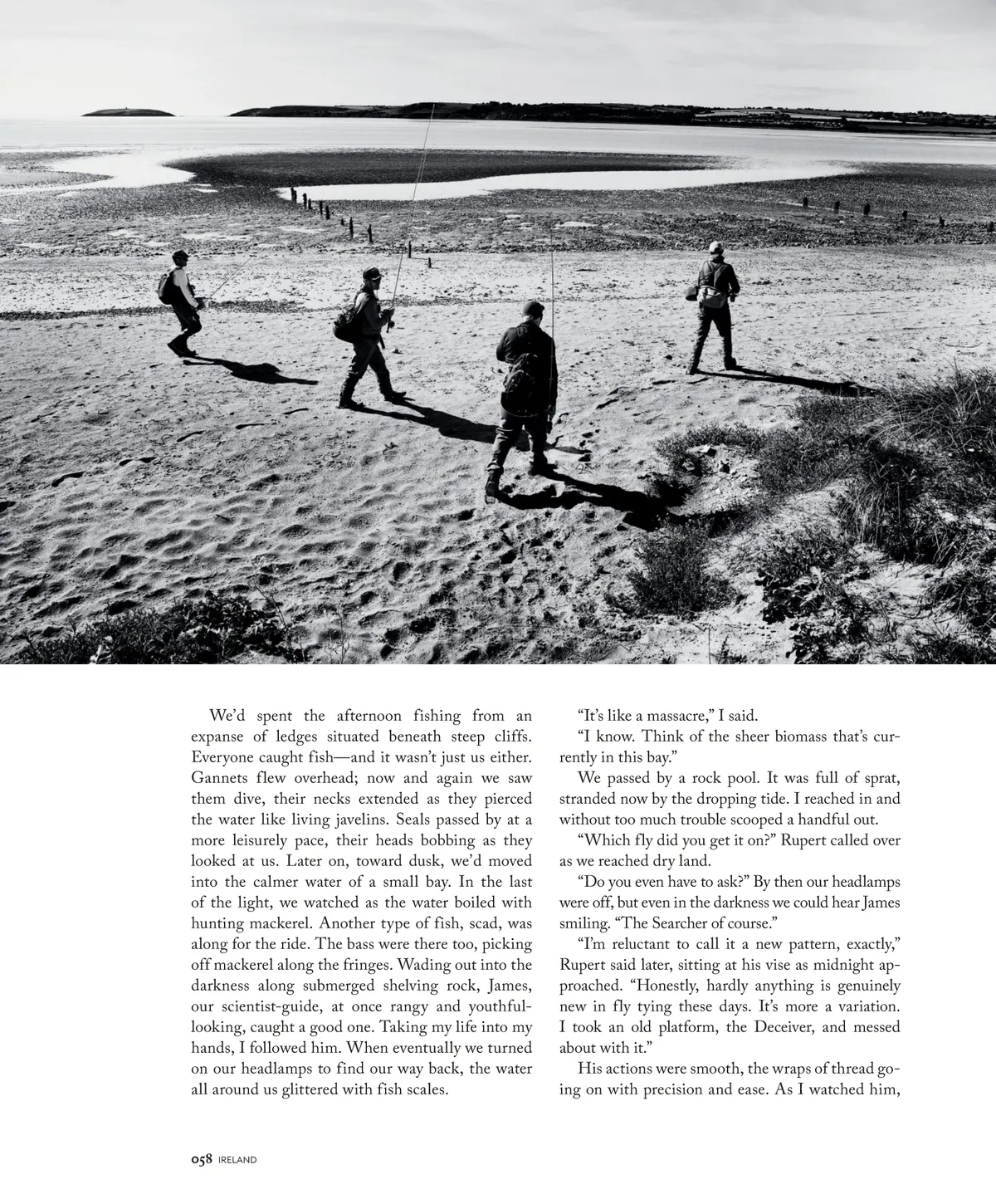
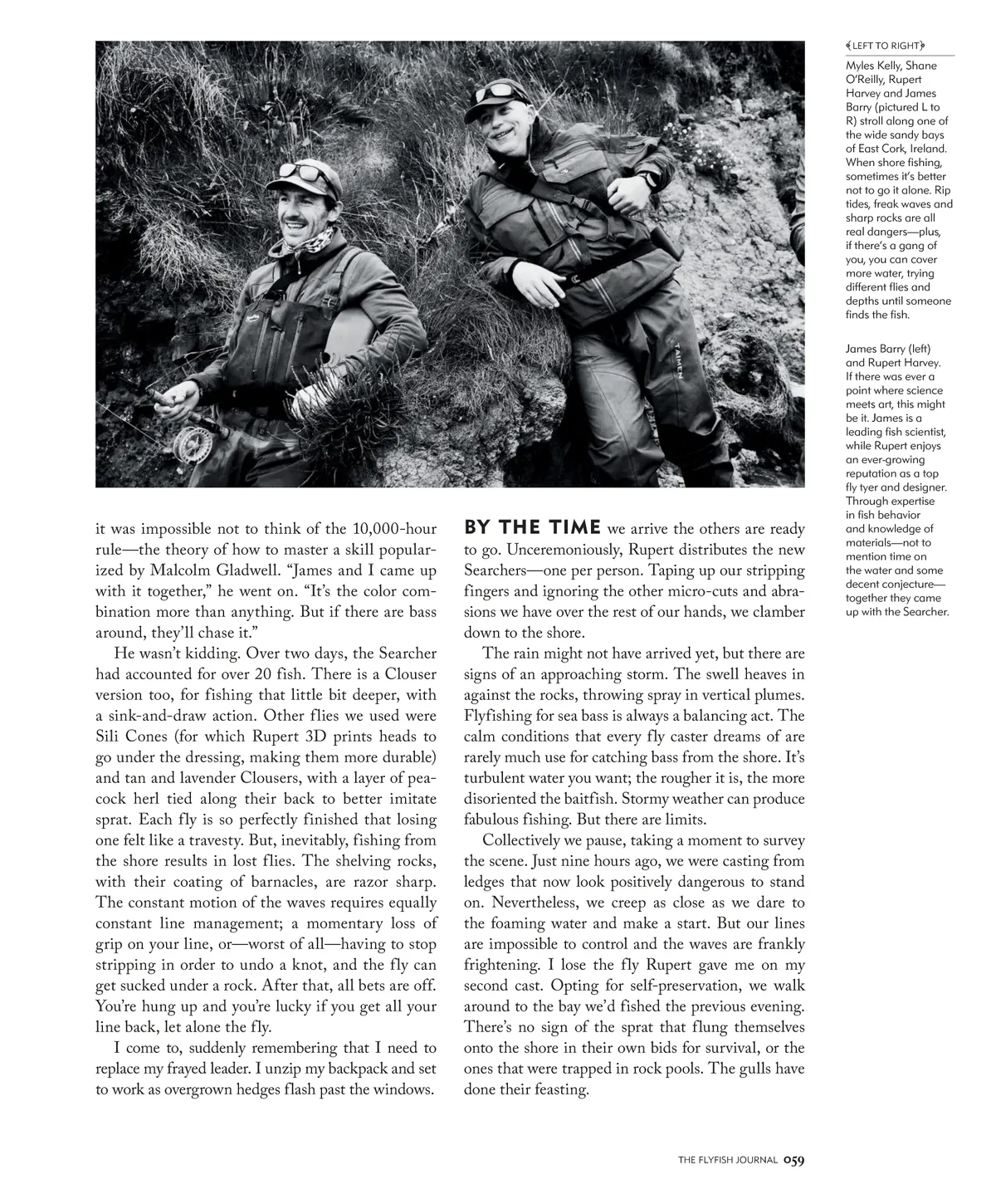
We’d spent the afternoon fishing from an expanse of ledges situated beneath steep cliffs. Everyone caught fish—and it wasn’t just us either. Gannets flew overhead; now and again we saw them dive, their necks extended as they pierced the water like living javelins. Seals passed by at a more leisurely pace, their heads bobbing as they looked at us. Later on, toward dusk, we’d moved into the calmer water of a small bay. In the last of the light, we watched as the water boiled with hunting mackerel. Another type of fish, scad, was along for the ride. The bass were there too, picking off mackerel along the fringes. Wading out into the darkness along submerged shelving rock, James, our scientist-guide, at once rangy and youthful-looking, caught a good one. Taking my life into my hands, I followed him. When eventually we turned on our headlamps to find our way back, the water all around us glittered with fish scales. “It’s like a massacre,” I said. “I know. Think of the sheer biomass that’s cur-rently in this bay.” We passed by a rock pool. It was full of sprat, stranded now by the dropping tide. I reached in and without too much trouble scooped a handful out. “Which fly did you get it on?” Rupert called over as we reached dry land. “Do you even have to ask?” By then our headlamps were off, but even in the darkness we could hear James smiling. “The Searcher of course.” “I’m reluctant to call it a new pattern, exactly,” Rupert said later, sitting at his vise as midnight ap-proached. “Honestly, hardly anything is genuinely new in fly tying these days. It’s more a variation. I took an old platform, the Deceiver, and messed about with it.” His actions were smooth, the wraps of thread go-ing on with precision and ease. As I watched him, 058 IRELAND
The Flyfish Journal The Flyfish Journal 15.4: Page 56