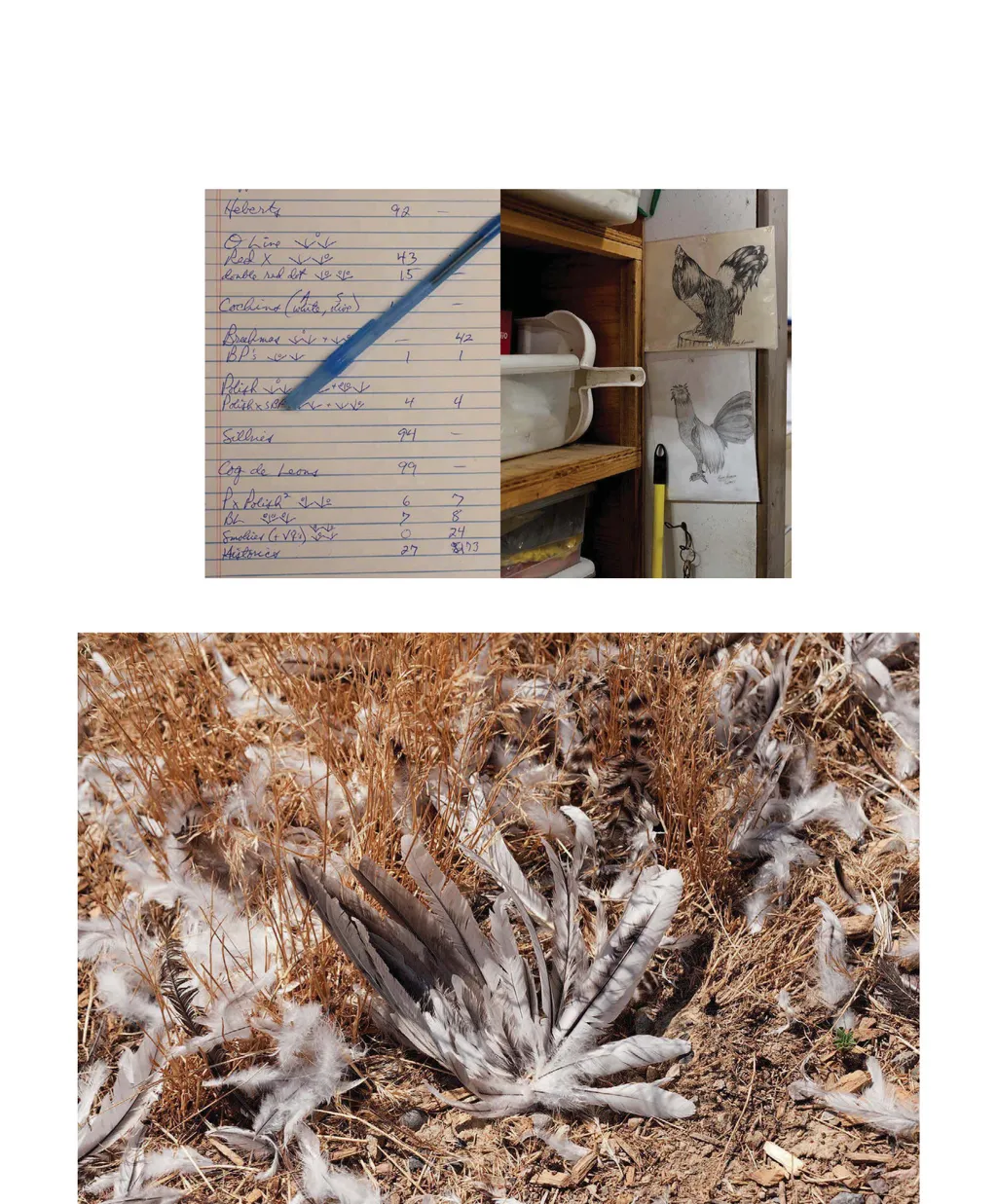
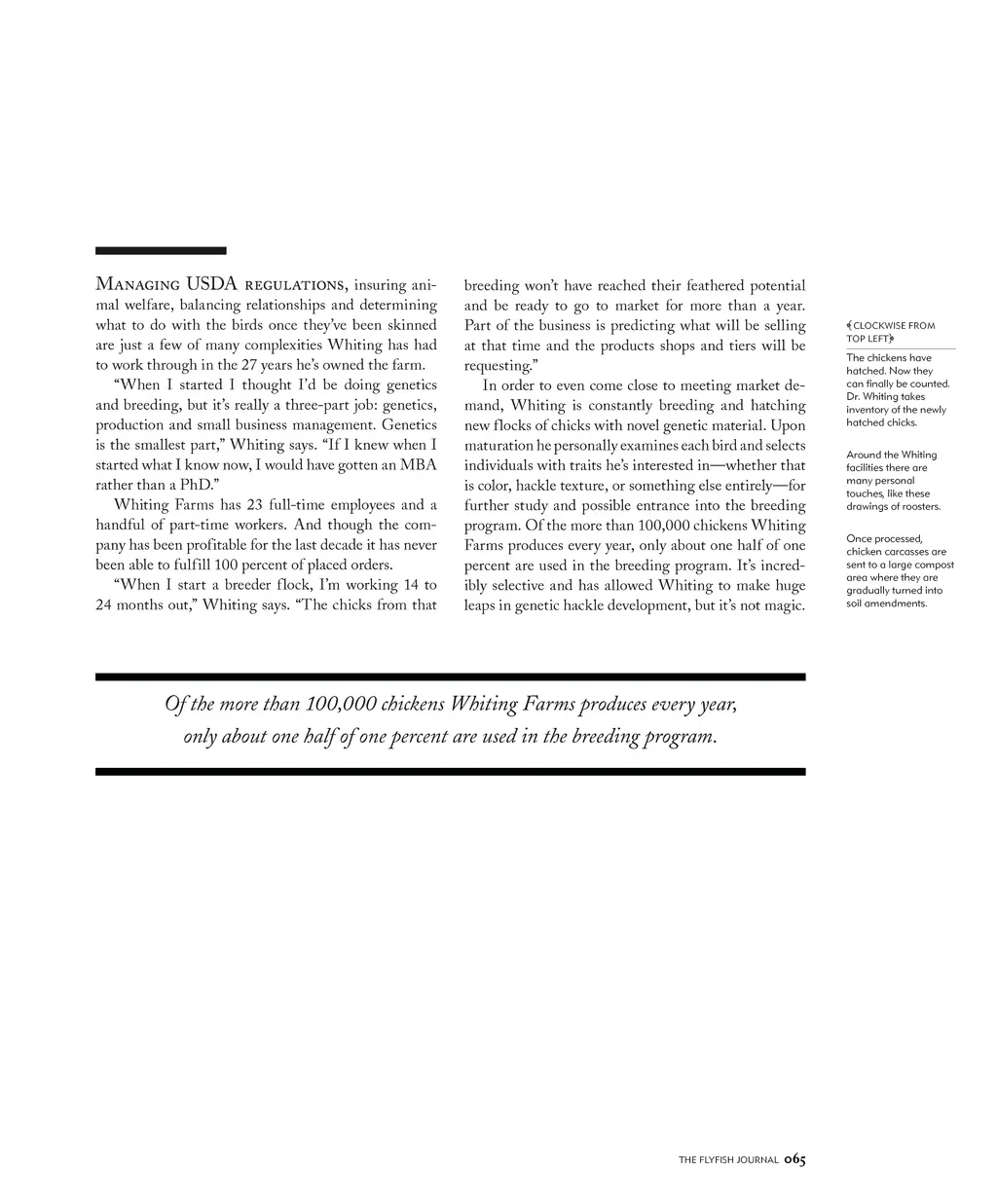
Managing USDA regulations, insuring ani-mal welfare, balancing relationships and determining what to do with the birds once they’ve been skinned are just a few of many complexities Whiting has had to work through in the 27 years he’s owned the farm. “When I started I thought I’d be doing genetics and breeding, but it’s really a three-part job: genetics, production and small business management. Genetics is the smallest part,” Whiting says. “If I knew when I started what I know now, I would have gotten an MBA rather than a PhD.” Whiting Farms has 23 full-time employees and a handful of part-time workers. And though the com-pany has been profitable for the last decade it has never been able to fulfill 100 percent of placed orders. “When I start a breeder flock, I’m working 14 to 24 months out,” Whiting says. “The chicks from that breeding won’t have reached their feathered potential and be ready to go to market for more than a year. Part of the business is predicting what will be selling at that time and the products shops and tiers will be requesting.” In order to even come close to meeting market de-mand, Whiting is constantly breeding and hatching new flocks of chicks with novel genetic material. Upon maturation he personally examines each bird and selects individuals with traits he’s interested in—whether that is color, hackle texture, or something else entirely—for further study and possible entrance into the breeding program. Of the more than 100,000 chickens Whiting Farms produces every year, only about one half of one percent are used in the breeding program. It’s incred-ibly selective and has allowed Whiting to make huge leaps in genetic hackle development, but it’s not magic. CLOCKWISE FROM TOP LEFT The chickens have hatched. Now they can finally be counted. Dr. Whiting takes inventory of the newly hatched chicks. Around the Whiting facilities there are many personal touches, like these drawings of roosters. Once processed, chicken carcasses are sent to a large compost area where they are gradually turned into soil amendments. Of the more than 100,000 chickens Whiting Farms produces every year, only about one half of one percent are used in the breeding program. THE FLYFISH JOURNAL 065
The Flyfish Journal Volume Eight, Issue Two: Page 65