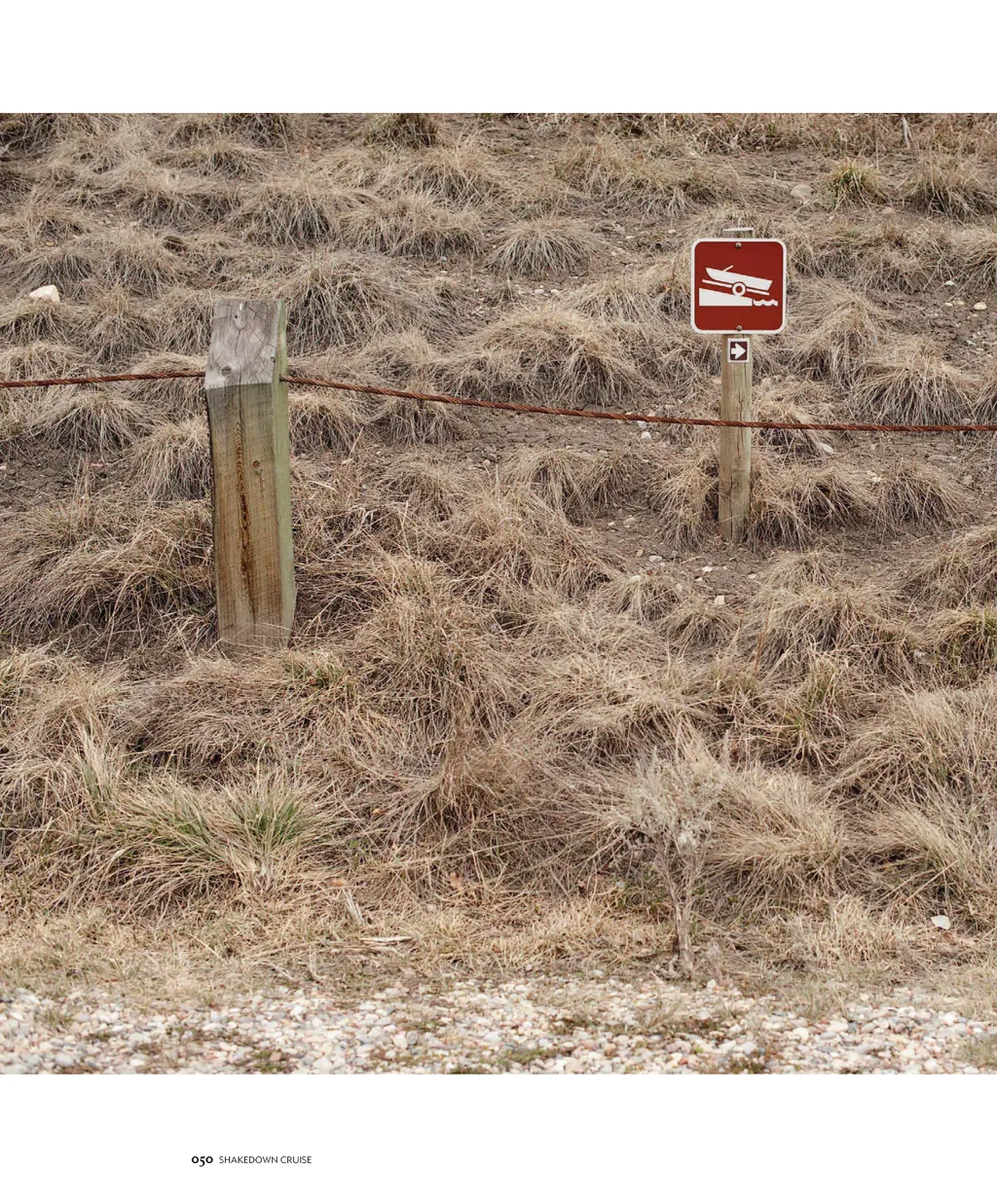
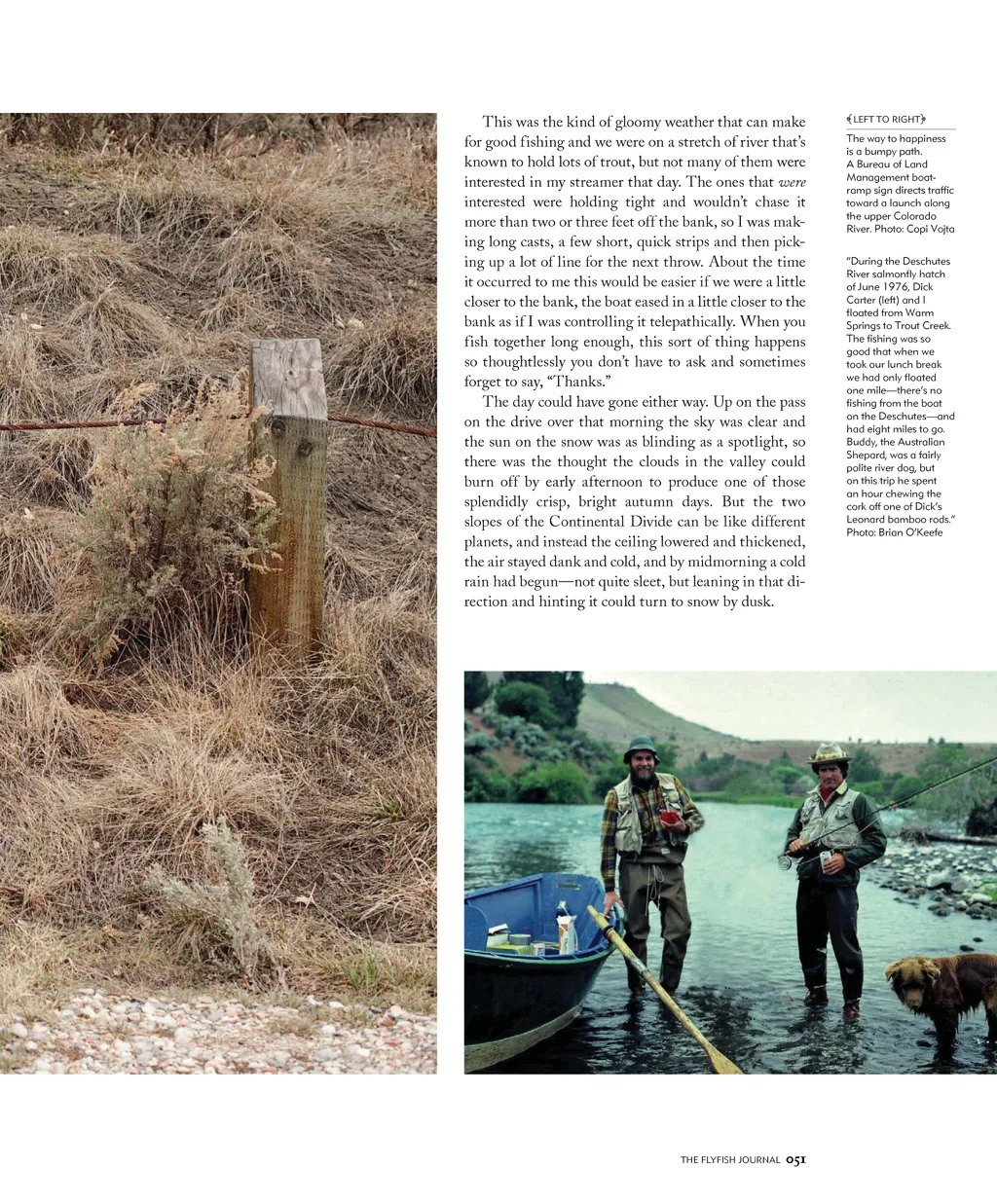
This was the kind of gloomy weather that can make for good fishing and we were on a stretch of river that’s known to hold lots of trout, but not many of them were interested in my streamer that day. The ones that were interested were holding tight and wouldn’t chase it more than two or three feet off the bank, so I was mak-k ing long casts, a few short, quick strips and then pick-k ing up a lot of line for the next throw. About the time it occurred to me this would be easier if we were a little closer to the bank, the boat eased in a little closer to the bank as if I was controlling it telepathically. When you fish together long enough, this sort of thing happens so thoughtlessly you don’t have to ask and sometimes forget to say, “Thanks.” The day could have gone either way. Up on the pass on the drive over that morning the sky was clear and the sun on the snow was as blinding as a spotlight, so there was the thought the clouds in the valley could burn off by early afternoon to produce one of those splendidly crisp, bright autumn days. But the two slopes of the Continental Divide can be like different planets, and instead the ceiling lowered and thickened, the air stayed dank and cold, and by midmorning a cold rain had begun—not quite sleet, but leaning in that di-rection and hinting it could turn to snow by dusk. LEFT TO RIGHT The way to happiness is a bumpy path. A Bureau of Land Management boat-ramp sign directs traffic toward a launch along the upper Colorado River. Photo: Copi Vojta “During the Deschutes River salmonfly hatch of June 1976, Dick Carter (left) and I floated from Warm Springs to Trout Creek. The fishing was so good that when we took our lunch break we had only floated one mile—there’s no fishing from the boat on the Deschutes—and had eight miles to go. Buddy, the Australian Shepard, was a fairly polite river dog, but on this trip he spent an hour chewing the cork off one of Dick’s Leonard bamboo rods.” Photo: Brian O’Keefe THE FLYFISH JOURNAL 051
The Flyfish Journal Volume Eight, Issue Two: Page 51