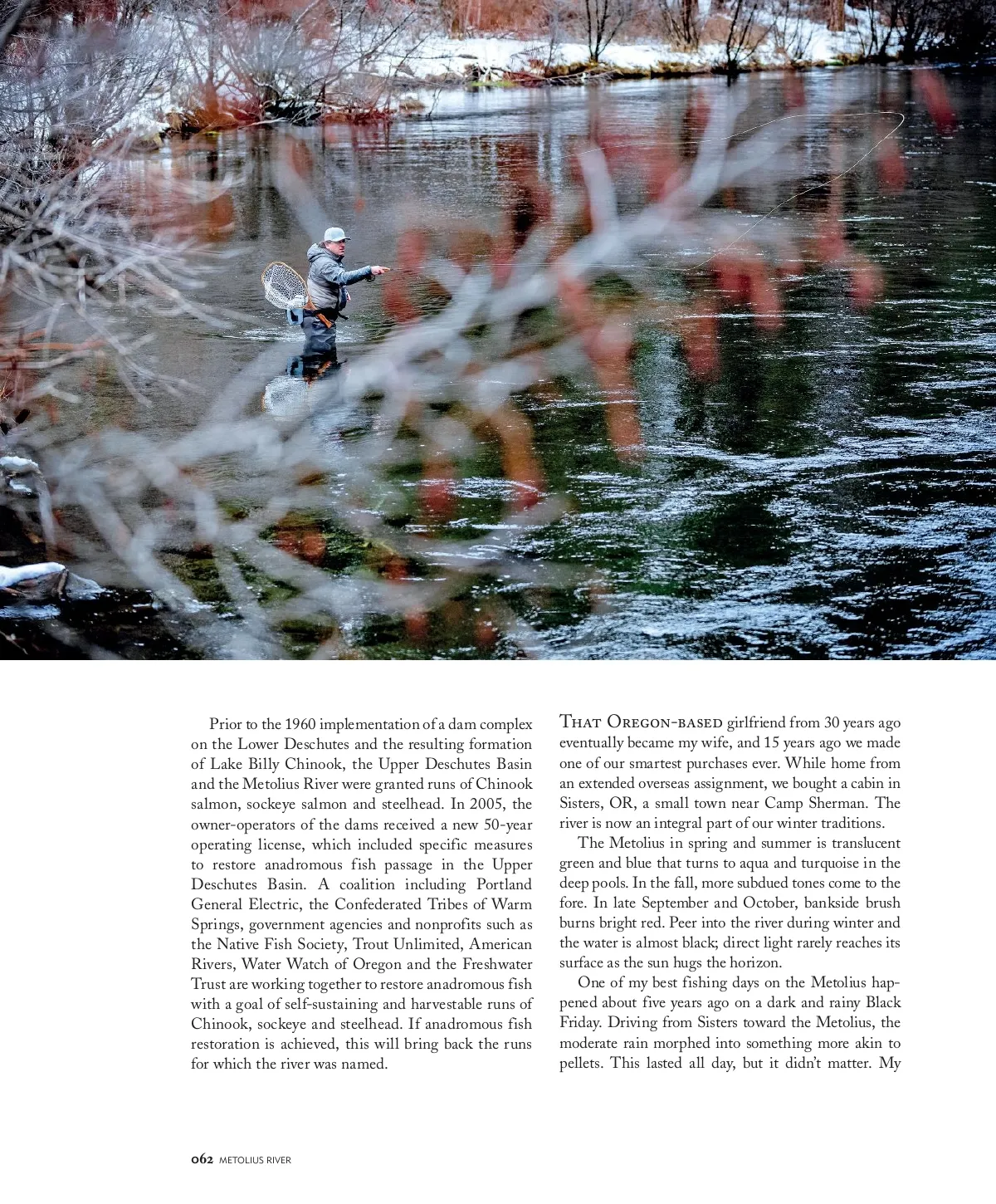
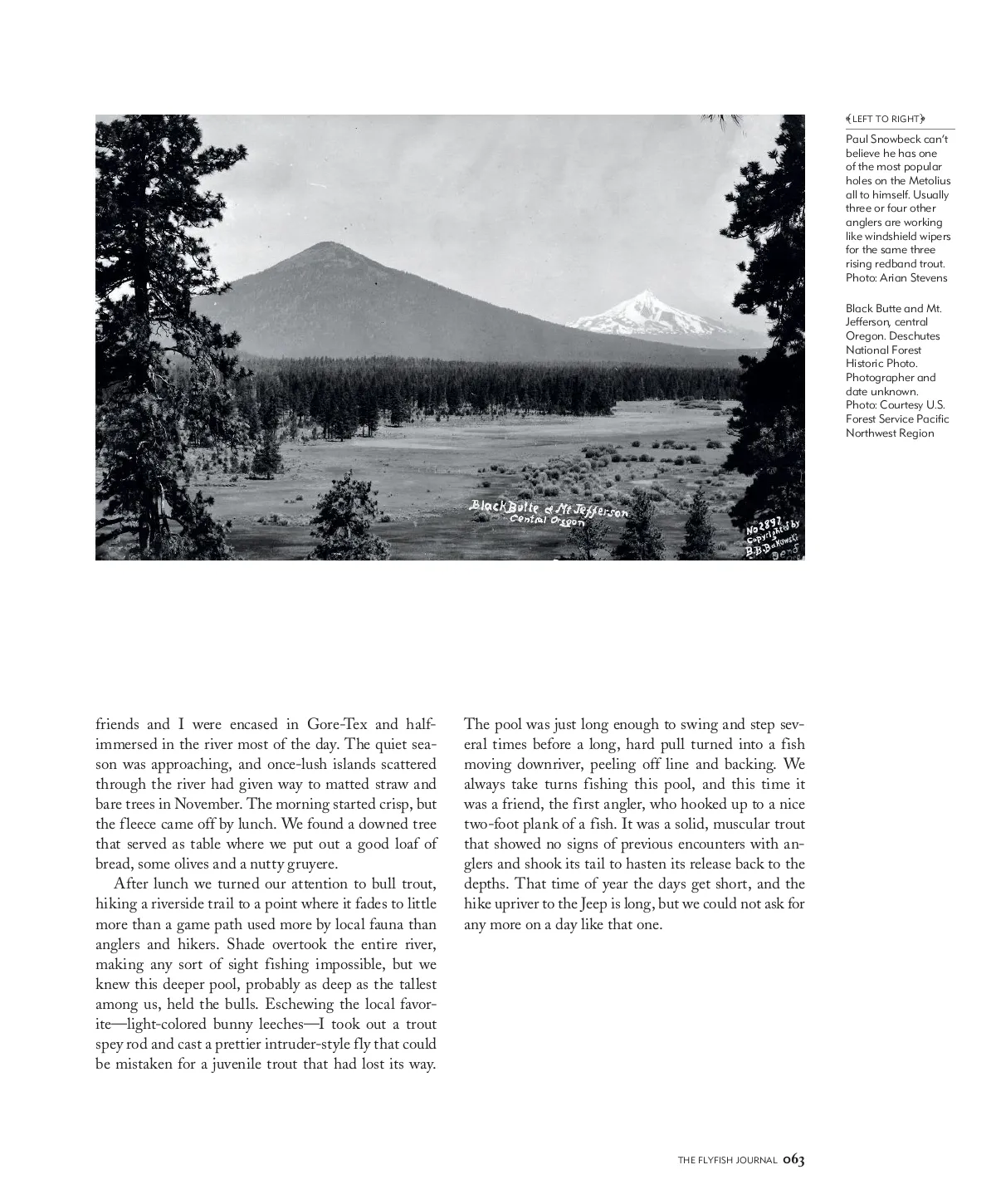
Prior to the 1960 implementation of a dam complex on the Lower Deschutes and the resulting formation of Lake Billy Chinook, the Upper Deschutes Basin and the Metolius River were granted runs of Chinook salmon, sockeye salmon and steelhead. In 2005, the owner-operators of the dams received a new 50-year operating license, which included specific measures to restore anadromous fish passage in the Upper Deschutes Basin. A coalition including Portland General Electric, the Confederated Tribes of Warm Springs, government agencies and nonprofits such as the Native Fish Society, Trout Unlimited, American Rivers, Water Watch of Oregon and the Freshwater Trust are working together to restore anadromous fish with a goal of self-sustaining and harvestable runs of Chinook, sockeye and steelhead. If anadromous fish restoration is achieved, this will bring back the runs for which the river was named. That Oregon-based girlfriend from 30 years ago eventually became my wife, and 15 years ago we made one of our smartest purchases ever. While home from an extended overseas assignment, we bought a cabin in Sisters, OR, a small town near Camp Sherman. The river is now an integral part of our winter traditions. The Metolius in spring and summer is translucent green and blue that turns to aqua and turquoise in the deep pools. In the fall, more subdued tones come to the fore. In late September and October, bankside brush burns bright red. Peer into the river during winter and the water is almost black; direct light rarely reaches its surface as the sun hugs the horizon. One of my best fishing days on the Metolius hap-pened about five years ago on a dark and rainy Black Friday. Driving from Sisters toward the Metolius, the moderate rain morphed into something more akin to pellets. This lasted all day, but it didn’t matter. My 062 METOLIUS RIVER
The Flyfish Journal Volume 13, Issue 2: Page 62