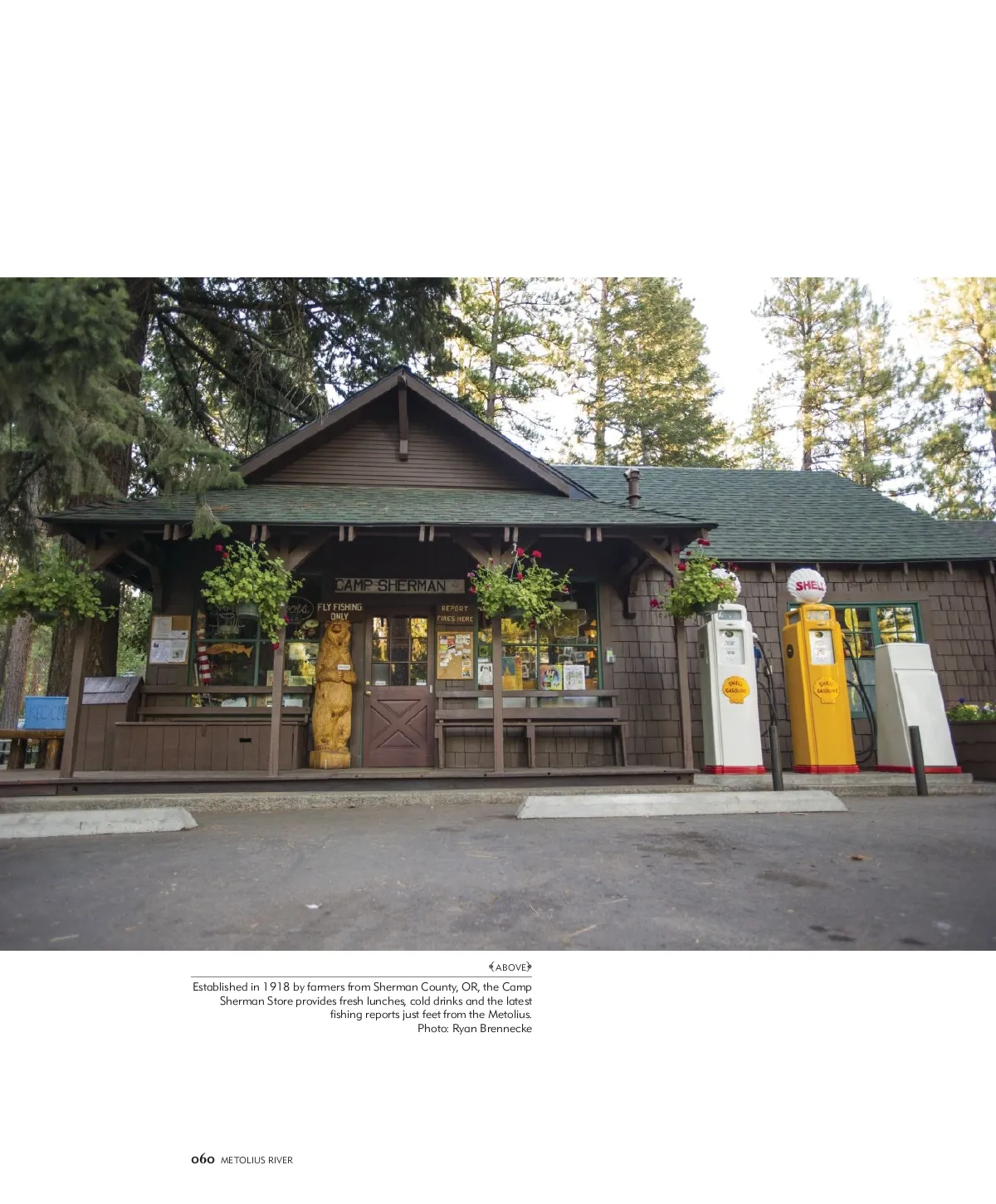
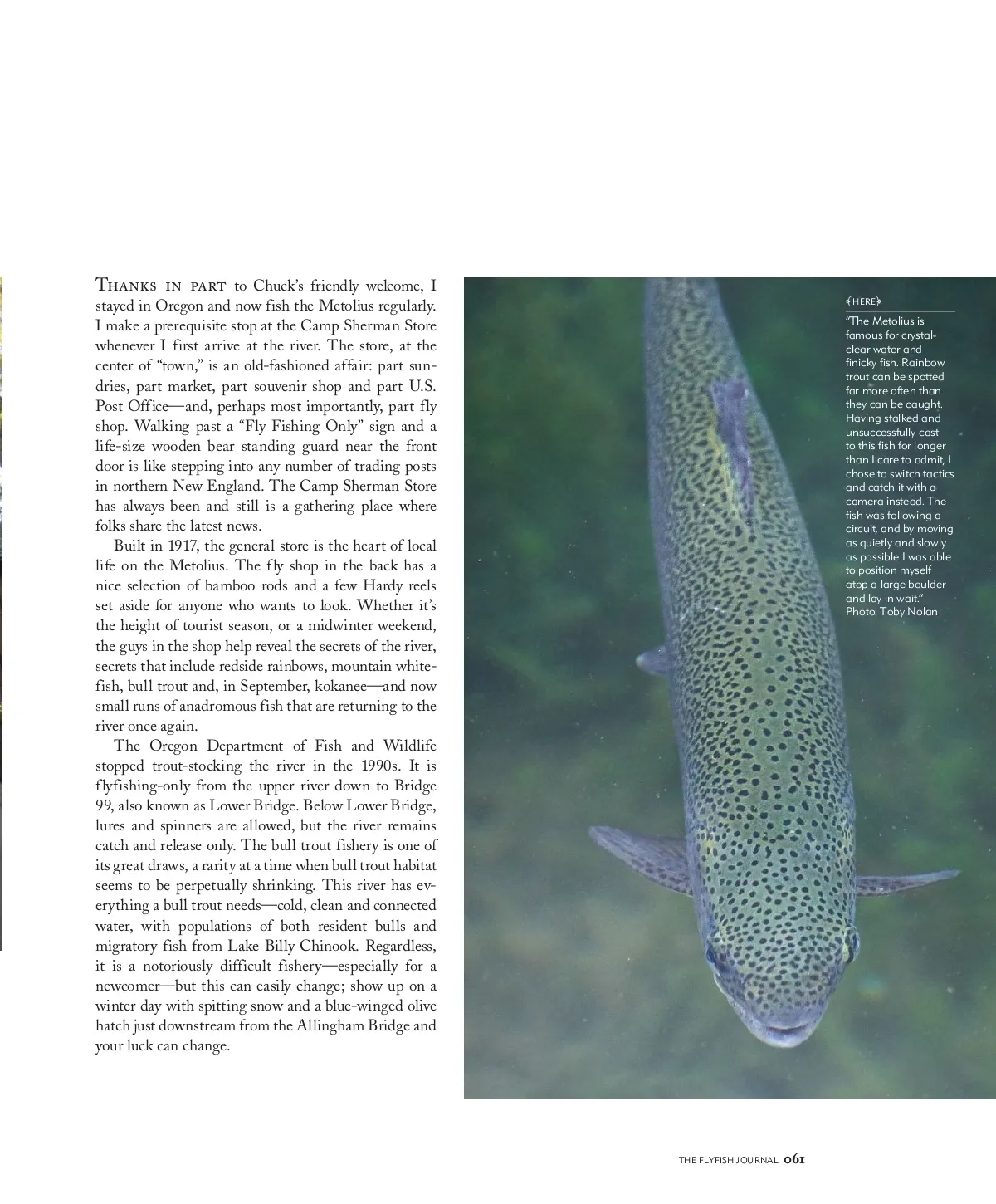
Thanks in part to Chuck’s friendly welcome, I stayed in Oregon and now fish the Metolius regularly. I make a prerequisite stop at the Camp Sherman Store whenever I first arrive at the river. The store, at the center of “town,” is an old-fashioned affair: part sun-dries, part market, part souvenir shop and part U.S. Post Office—and, perhaps most importantly, part fly shop. Walking past a “Fly Fishing Only” sign and a life-size wooden bear standing guard near the front door is like stepping into any number of trading posts in northern New England. The Camp Sherman Store has always been and still is a gathering place where folks share the latest news. Built in 1917, the general store is the heart of local life on the Metolius. The fly shop in the back has a nice selection of bamboo rods and a few Hardy reels set aside for anyone who wants to look. Whether it’s the height of tourist season, or a midwinter weekend, the guys in the shop help reveal the secrets of the river, secrets that include redside rainbows, mountain white-fish, bull trout and, in September, kokanee—and now small runs of anadromous fish that are returning to the river once again. The Oregon Department of Fish and Wildlife stopped trout-stocking the river in the 1990s. It is flyfishing-only from the upper river down to Bridge 99, also known as Lower Bridge. Below Lower Bridge, lures and spinners are allowed, but the river remains catch and release only. The bull trout fishery is one of its great draws, a rarity at a time when bull trout habitat seems to be perpetually shrinking. This river has ev-erything a bull trout needs—cold, clean and connected water, with populations of both resident bulls and migratory fish from Lake Billy Chinook. Regardless, it is a notoriously difficult fishery—especially for a newcomer—but this can easily change; show up on a winter day with spitting snow and a blue-winged olive hatch just downstream from the Allingham Bridge and your luck can change. HERE “The Metolius is famous for crystal-clear water and finicky fish. Rainbow trout can be spotted far more often than they can be caught. Having stalked and unsuccessfully cast to this fish for longer than I care to admit, I chose to switch tactics and catch it with a camera instead. The fish was following a circuit, and by moving as quietly and slowly as possible I was able to position myself atop a large boulder and lay in wait.” Photo: Toby Nolan THE FLYFISH JOURNAL 061
The Flyfish Journal Volume 13, Issue 2: Page 61