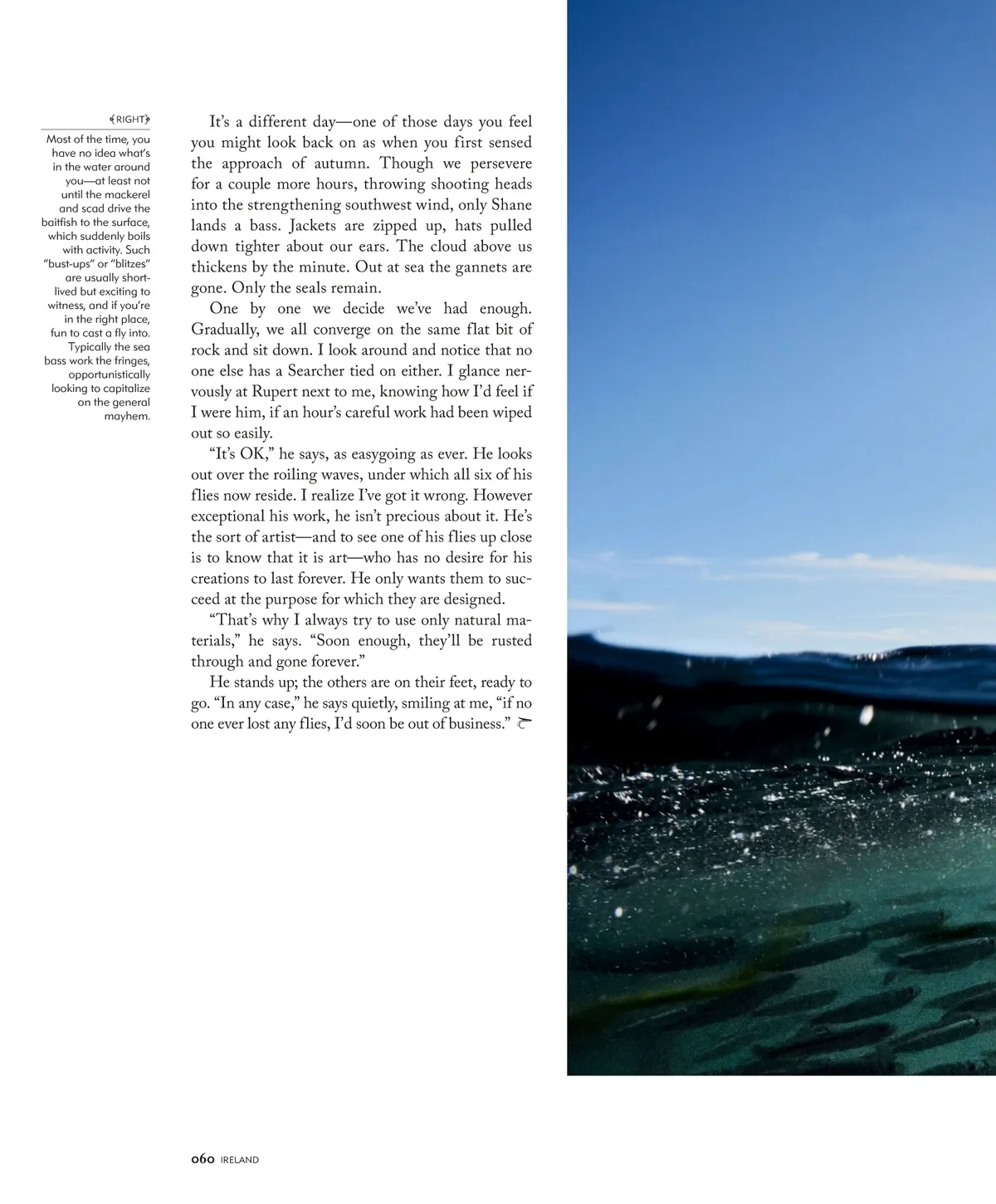
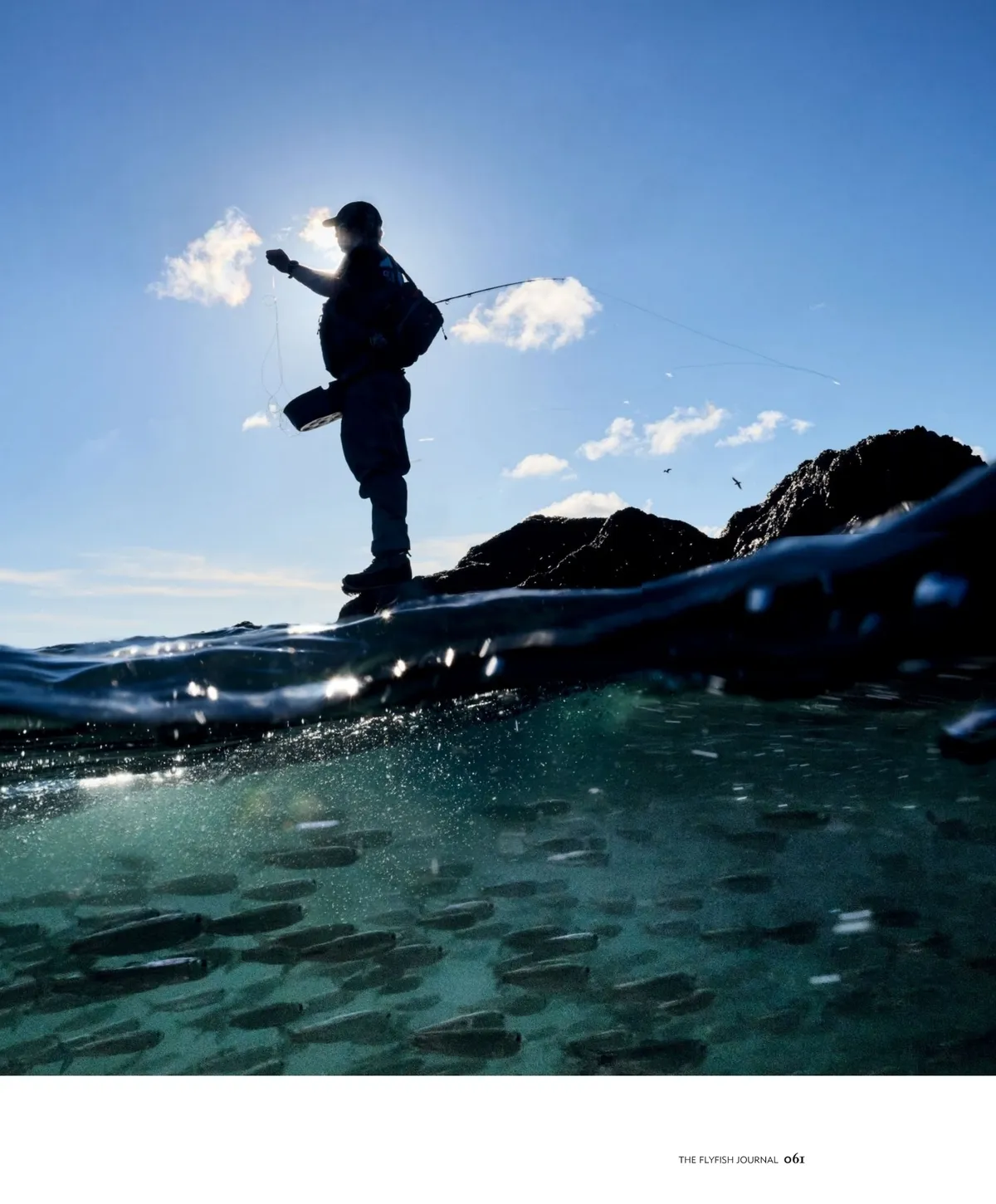
• RIGHT • Most of the time, you have no idea what’s in the water around you—at least not until the mackerel and scad drive the baitfish to the surface, which suddenly boils with activity. Such “bust-ups” or “blitzes” are usually short-lived but exciting to witness, and if you’re in the right place, fun to cast a fly into. Typically the sea bass work the fringes, opportunistically looking to capitalize on the general mayhem. It’s a different day—one of those days you feel you might look back on as when you first sensed the approach of autumn. Though we persevere for a couple more hours, throwing shooting heads into the strengthening southwest wind, only Shane lands a bass. Jackets are zipped up, hats pulled down tighter about our ears. The cloud above us thickens by the minute. Out at sea the gannets are gone. Only the seals remain. One by one we decide we’ve had enough. Gradually, we all converge on the same flat bit of rock and sit down. I look around and notice that no one else has a Searcher tied on either. I glance ner-vously at Rupert next to me, knowing how I’d feel if I were him, if an hour’s careful work had been wiped out so easily. “It’s OK,” he says, as easygoing as ever. He looks out over the roiling waves, under which all six of his flies now reside. I realize I’ve got it wrong. However exceptional his work, he isn’t precious about it. He’s the sort of artist—and to see one of his flies up close is to know that it is art—who has no desire for his creations to last forever. He only wants them to suc-ceed at the purpose for which they are designed. “That’s why I always try to use only natural ma-terials,” he says. “Soon enough, they’ll be rusted through and gone forever.” He stands up; the others are on their feet, ready to go. “In any case,” he says quietly, smiling at me, “if no one ever lost any flies, I’d soon be out of business.” 060 IRELAND
The Flyfish Journal The Flyfish Journal 15.4: Page 58