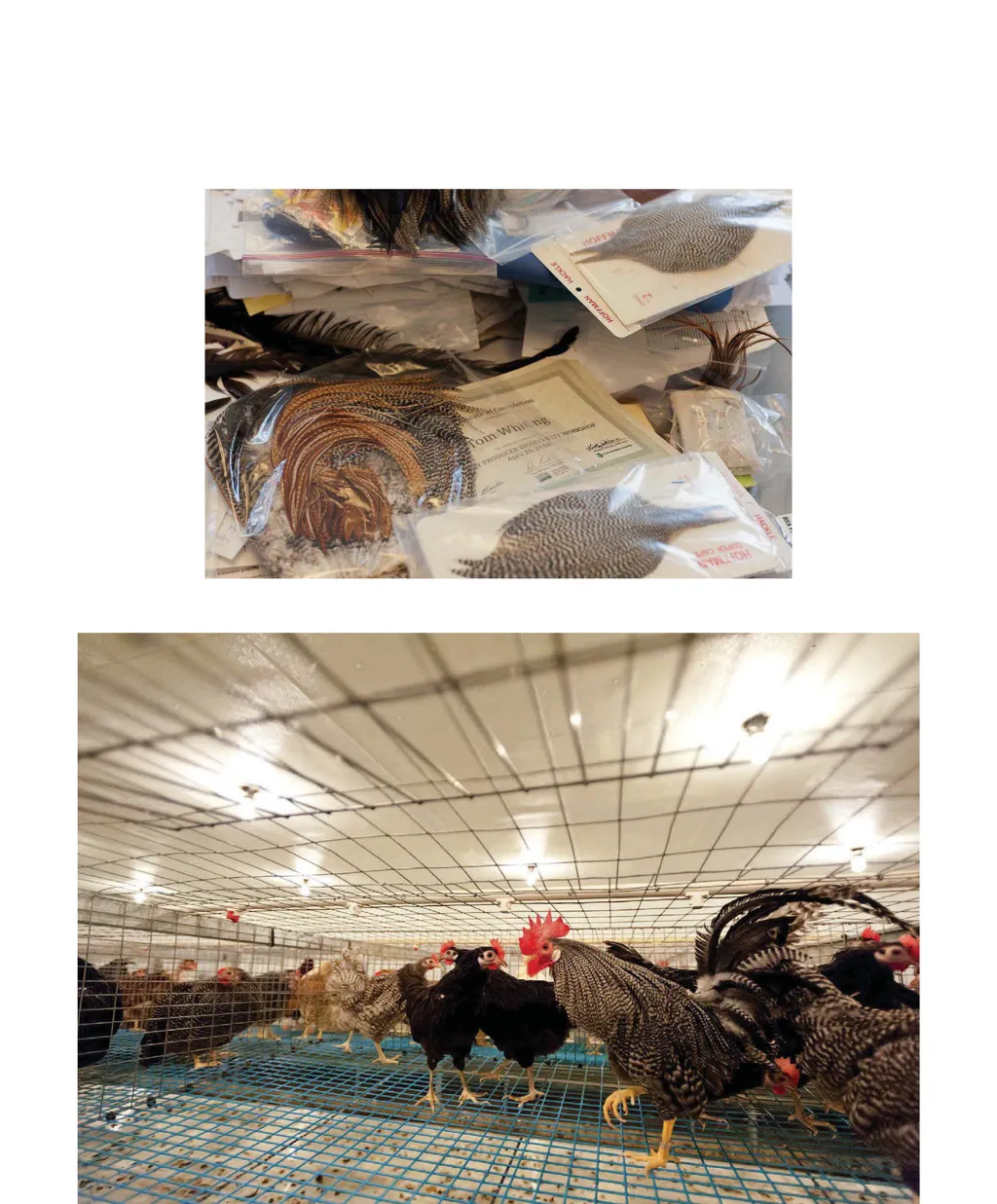
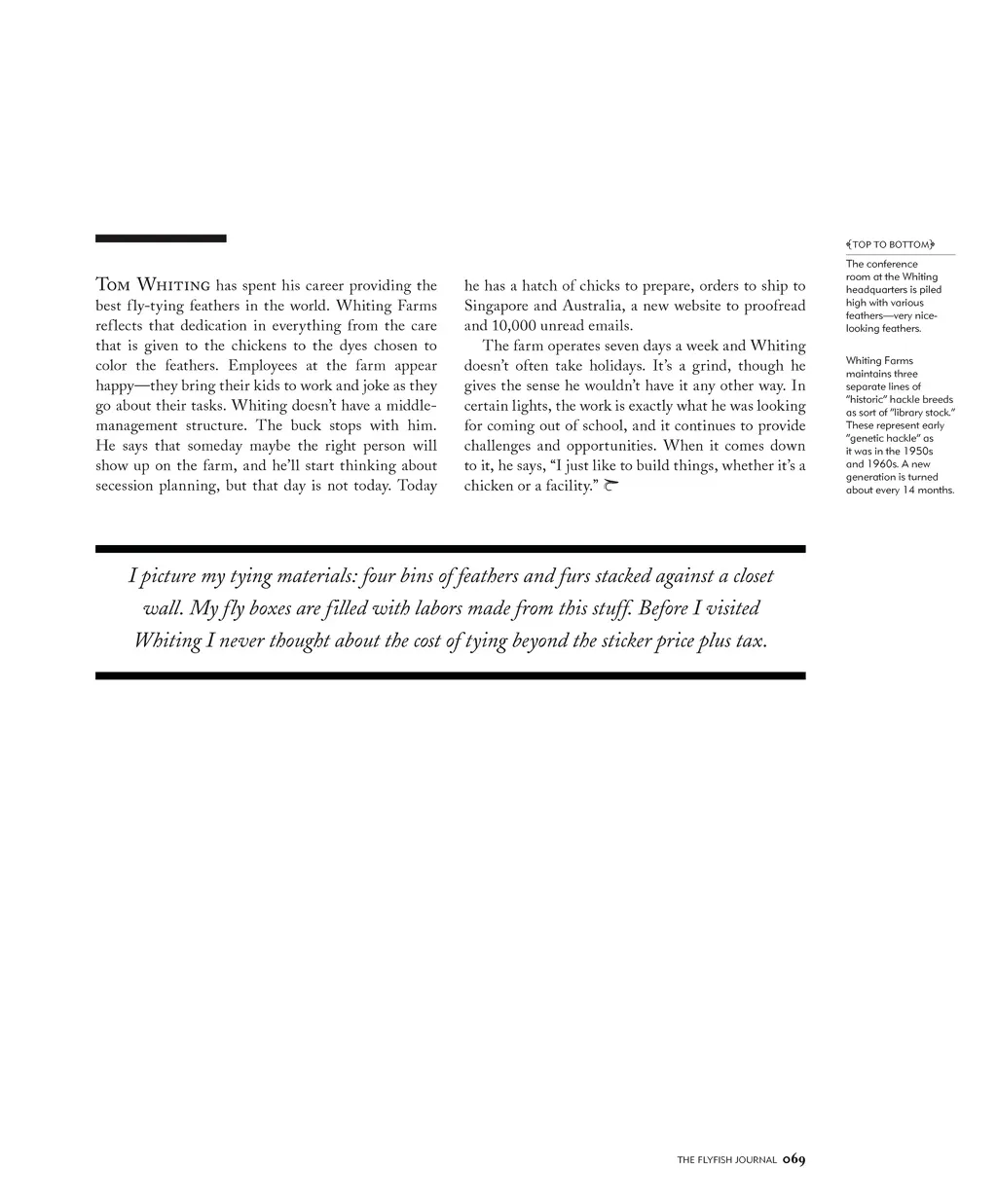
TOP TO BOTTOM Tom Whiting has spent his career providing the best fly-tying feathers in the world. Whiting Farms reflects that dedication in everything from the care that is given to the chickens to the dyes chosen to color the feathers. Employees at the farm appear happy—they bring their kids to work and joke as they go about their tasks. Whiting doesn’t have a middle-management structure. The buck stops with him. He says that someday maybe the right person will show up on the farm, and he’ll start thinking about secession planning, but that day is not today. Today he has a hatch of chicks to prepare, orders to ship to Singapore and Australia, a new website to proofread and 10,000 unread emails. The farm operates seven days a week and Whiting doesn’t often take holidays. It’s a grind, though he gives the sense he wouldn’t have it any other way. In certain lights, the work is exactly what he was looking for coming out of school, and it continues to provide challenges and opportunities. When it comes down to it, he says, “I just like to build things, whether it’s a chicken or a facility.” The conference room at the Whiting headquarters is piled high with various feathers—very nice-looking feathers. Whiting Farms maintains three separate lines of “historic” hackle breeds as sort of “library stock.” These represent early “genetic hackle” as it was in the 1950s and 1960s. A new generation is turned about every 14 months. I picture my tying materials: four bins of feathers and furs stacked against a closet wall. My fly boxes are filled with labors made from this stuff. Before I visited Whiting I never thought about the cost of tying beyond the sticker price plus tax. THE FLYFISH JOURNAL 069
The Flyfish Journal Volume Eight, Issue Two: Page 69