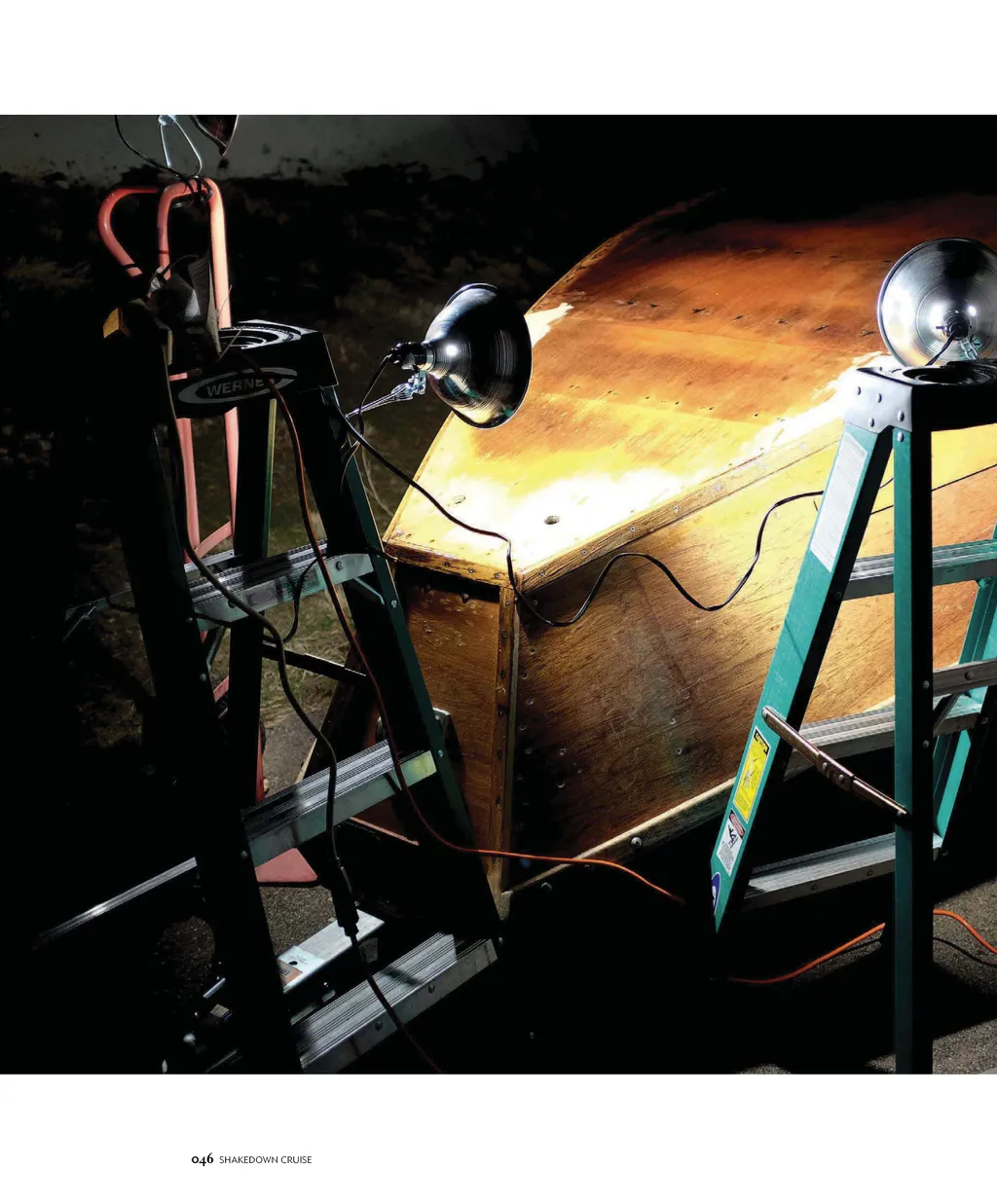
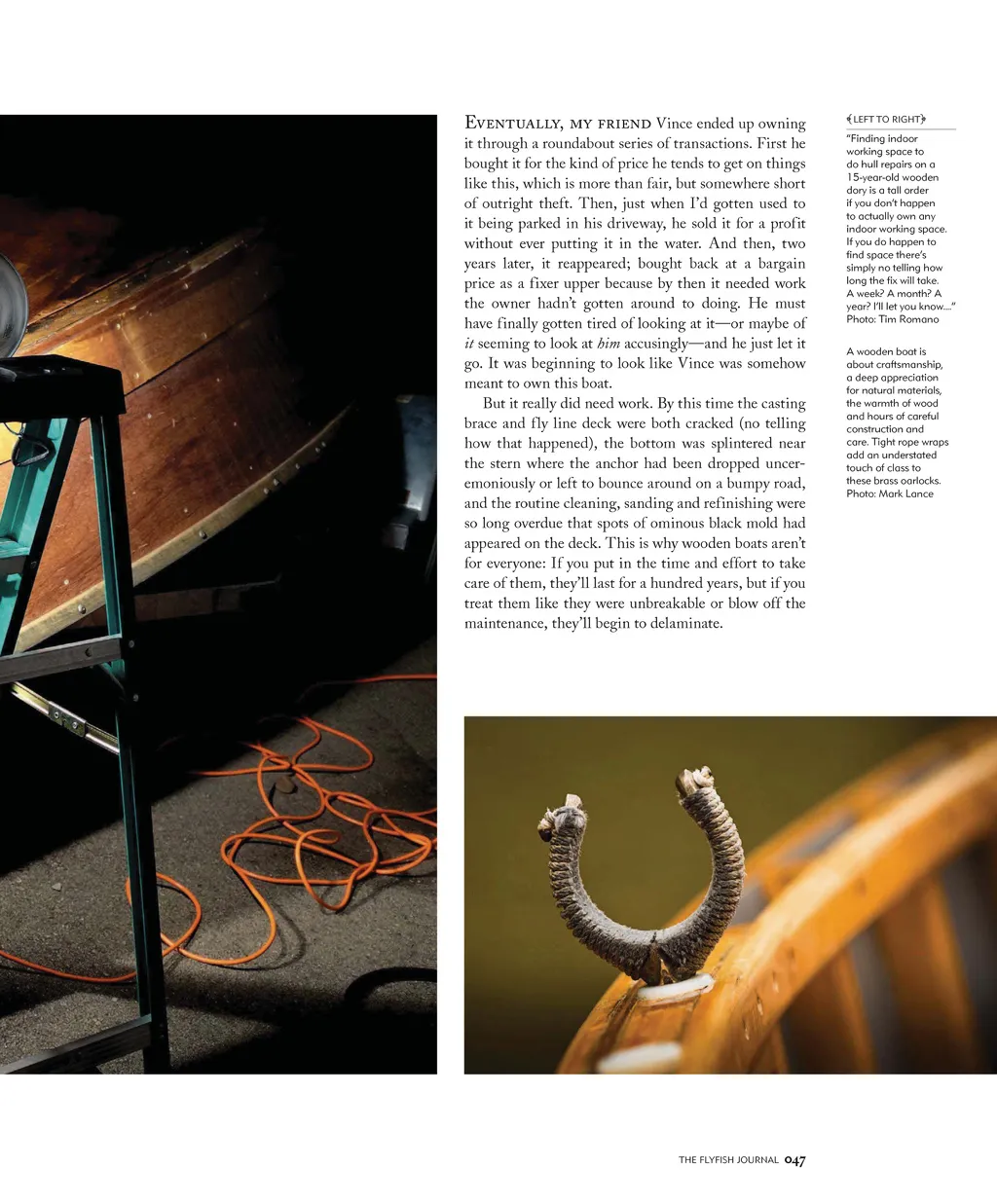
Eventually, my friend Vince ended up owning it through a roundabout series of transactions. First he bought it for the kind of price he tends to get on things like this, which is more than fair, but somewhere short of outright theft. Then, just when I’d gotten used to it being parked in his driveway, he sold it for a profit without ever putting it in the water. And then, two years later, it reappeared; bought back at a bargain price as a fixer upper because by then it needed work the owner hadn’t gotten around to doing. He must have finally gotten tired of looking at it—or maybe of it t seeming to look at him accusingly—and he just let it go. It was beginning to look like Vince was somehow meant to own this boat. But it really did need work. By this time the casting brace and fly line deck were both cracked (no telling how that happened), the bottom was splintered near the stern where the anchor had been dropped uncer-emoniously or left to bounce around on a bumpy road, and the routine cleaning, sanding and refinishing were so long overdue that spots of ominous black mold had appeared on the deck. This is why wooden boats aren’t for everyone: If you put in the time and effort to take care of them, they’ll last for a hundred years, but if you treat them like they were unbreakable or blow off the maintenance, they’ll begin to delaminate. LEFT TO RIGHT “Finding indoor working space to do hull repairs on a 15-year-old wooden dory is a tall order if you don’t happen to actually own any indoor working space. If you do happen to find space there’s simply no telling how long the fix will take. A week? A month? A year? I’ll let you know….” Photo: Tim Romano A wooden boat is about craftsmanship, a deep appreciation for natural materials, the warmth of wood and hours of careful construction and care. Tight rope wraps add an understated touch of class to these brass oarlocks. Photo: Mark Lance THE FLYFISH JOURNAL 047
The Flyfish Journal Volume Eight, Issue Two: Page 47