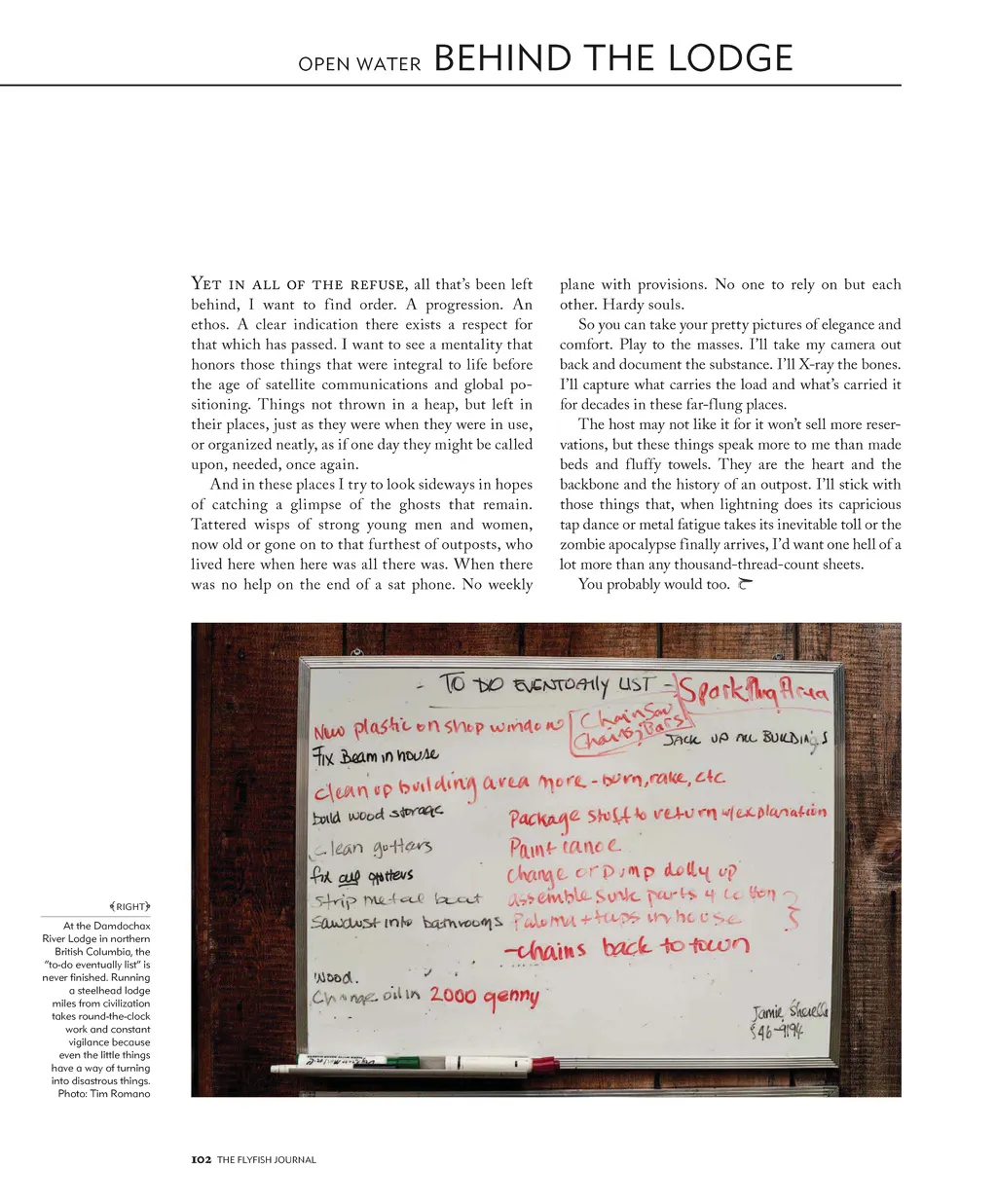
OPEN WATER BEHIND THE LODGE Yet in all of the refuse , all that’s been left behind, I want to find order. A progression. An ethos. A clear indication there exists a respect for that which has passed. I want to see a mentality that honors those things that were integral to life before the age of satellite communications and global po-sitioning. Things not thrown in a heap, but left in their places, just as they were when they were in use, or organized neatly, as if one day they might be called upon, needed, once again. And in these places I try to look sideways in hopes of catching a glimpse of the ghosts that remain. Tattered wisps of strong young men and women, now old or gone on to that furthest of outposts, who lived here when here was all there was. When there was no help on the end of a sat phone. No weekly plane with provisions. No one to rely on but each other. Hardy souls. So you can take your pretty pictures of elegance and comfort. Play to the masses. I’ll take my camera out back and document the substance. I’ll X-ray the bones. I’ll capture what carries the load and what’s carried it for decades in these far-flung places. The host may not like it for it won’t sell more reser-vations, but these things speak more to me than made beds and fluffy towels. They are the heart and the backbone and the history of an outpost. I’ll stick with those things that, when lightning does its capricious tap dance or metal fatigue takes its inevitable toll or the zombie apocalypse finally arrives, I’d want one hell of a lot more than any thousand-thread-count sheets. You probably would too. RIGHT At the Damdochax River Lodge in northern British Columbia, the “to-do eventually list” is never finished. Running a steelhead lodge miles from civilization takes round-the-clock work and constant vigilance because even the little things have a way of turning into disastrous things. Photo: Tim Romano 102 THE FLYFISH JOURNAL
The Flyfish Journal Volume Eight, Issue Two: Page 102