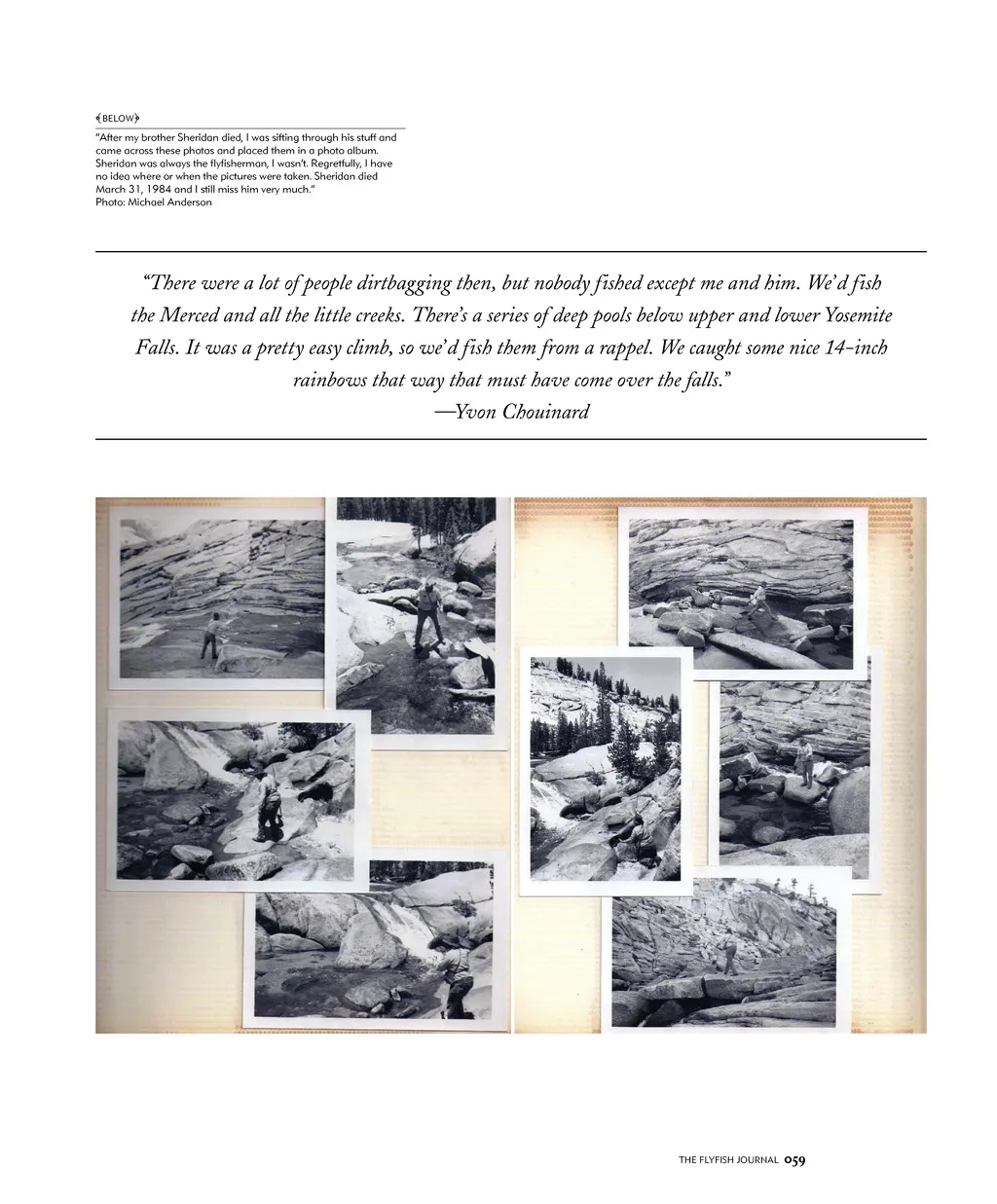
M y first copy of The Curtis Creek Manifesto was given to me by an old pro-fessor. He wasn’t much of a fisherman, but he knew about such things. I told him I’d taken up flyfishing, and he went looking for something in his shop. He stopped rummaging long enough to give a lecture on the mechanics of the pocket watch and the implications of its development on the oceango-ing explorers of the Pacific Coast—namely Captain Cook, a distant relative of his. After the lesson, he remembered his task and produced a ragged pamphlet he called “The Book.” That summer, when the professor drove home to Prairie City, OR, he invited me along. We fished a creek in the Strawberry Mountains and the professor brought along an old bamboo rod with cracked ferrules and a too-small reel attached to the rod with duct tape. His brother—a one-armed machinist who fished with an old Colt Navy on his hip—had stayed in Prairie City and wasn’t big on Portland fishermen. The old revolver, which didn’t fire, had once been a prop in the 1969 film, Paint Your Wagon . Lee Marvin, he said, had toted it around in front of the cameras. By noon, the professor and his brother had killed two good browns for lunch and released a dozen more. I was shut out, but the two men were kind enough not to sug-gest they should have killed a third. “What’s the name of this creek?” I asked over a handful of sunflower seeds. They let the question hang before the professor replied, “Curtis Creek.” “So,” his brother asked, “have you read The Book?” “What’s the name of this creek?” I asked over a handful of sunflower seeds. They let the question hang before the professor replied, “Curtis Creek.” “So,” his brother asked, “ have you read The Book?” 058 SHERIDAN ANDERSON
The Flyfish Journal Volume Eight, Issue Four: Page 58