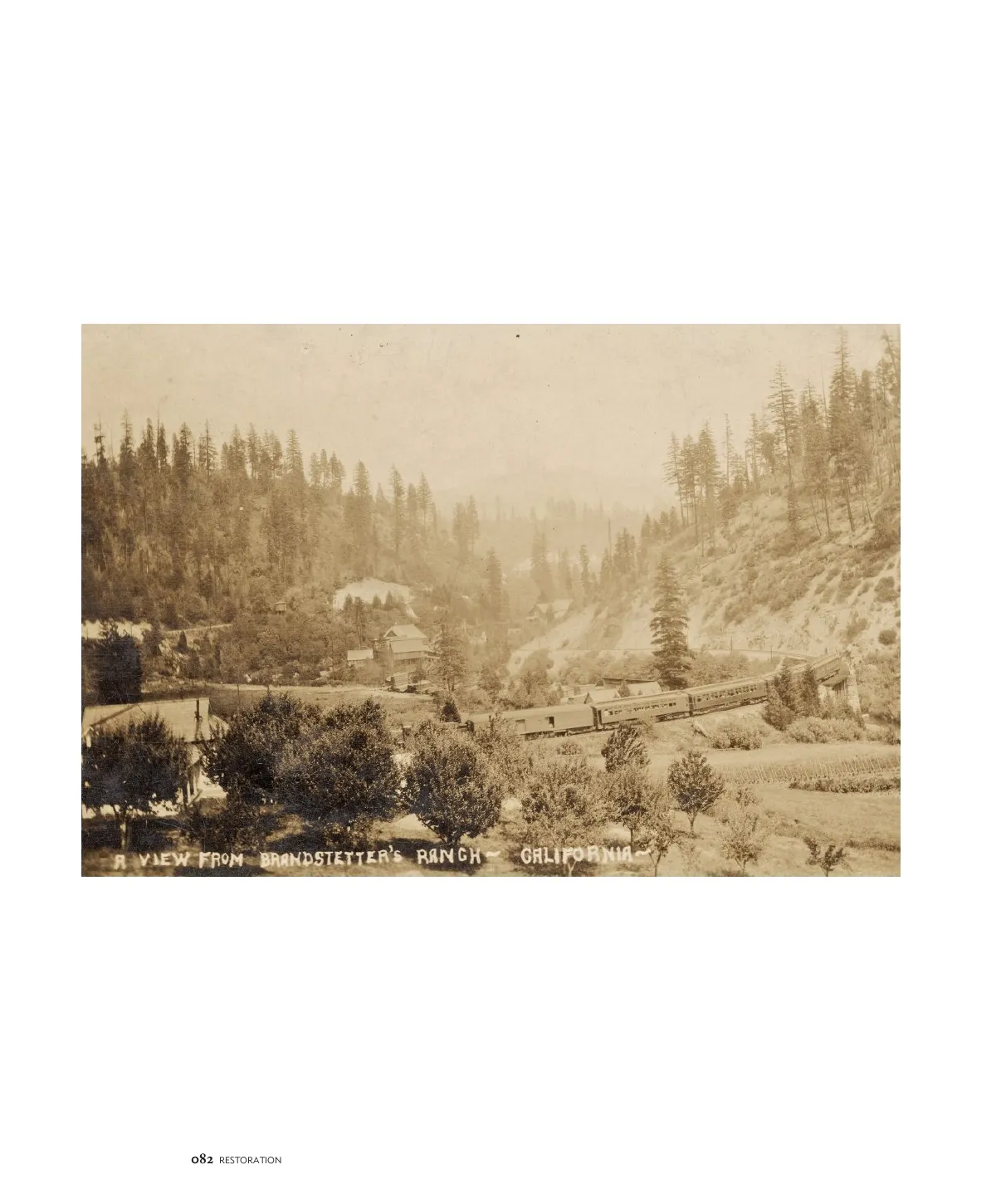
It would take years before new stocks of fish could be planted and even longer before they would return to their previous numbers. A quarter-century later, when I first fished it, I would not have suspected the catastrophe had I not read about it. Relieved by cool water against my legs during sweltering September days, I drifted nymphs through riffles and pools and caught 10-and 12-inch rainbow trout. The locals told me it was never quite the same—the insect hatches in the evenings weren’t as thick and the crayfish and sala-manders never came back—but considering the extent of the damage, that life returned at all was a miracle. Like a piece of ceramic, a river is fragile and given to destruction if mishandled. We can leave it barren with a single catastrophe or wear away at it with generations of misuse, but unlike porcelain, fixing it is a matter of years and decades. When we help the natural world to heal, we are doing it as much for ourselves as for those that will come later. The fishing will never be what it once was, but if we are farsighted and persistent, we can find a different equilibrium. For me, fishing is not relaxing . Before catching any fish there is a rising tension. It is the ten-sion of expectation, not unlike courtship or gambling. When I catch a fish, I am overcome by relief, like the experience of lightness after setting down a heavy pack after a long hike. If I fail, there is only the continued acidic discomfort of pulsing cortisol. All I can count on is the pleasant numbness of physical exhaustion, which comes from balancing and wading in the river, scram-bling up and down loose and rocky banks, and casting to where I hope to find my quarry. The more I want the fish, the less I enjoy the fish-ing. Enjoying the fishing requires getting lost in the process—the river’s surface that shifts like melting glass, the midges hovering in uninterpretable patterns, the infinite shades of light blended with shadow, the constant white noise of the current. The fish becomes a totem rather than a goal, a symbol that emerges through integration. In those interludes of transcendence, the parts of us that are marred and hardened are subsumed by the present. Presence is a means to free ourselves from the cycle of trauma and healing, damage and restoration, by giving us a glimpse of a different state: just being. Then, for a moment laid bare, we can accept and begin from what and where we are. Another day on the McCloud, having sweat through my shirt and steamed in my waders during a sun-soaked morning, I napped on the riverbank then sat with Kristin in a shallow, chilly pool shaded by a lone tree. Once the sun lowered beyond the canyon wall, I hooked a big rainbow at the end of a long run and tussled with it in the late-afternoon shade. I reached for my net once I had backed the fish into the shallows. I inched toward it, keeping side pressure with my rod— an old 6-weight Winston that I had chosen instead of the Hardy—as I closed the gap. It shook its head, but I kept pressure. It was just at my feet. It shook again, the tension left the line and the fish vanished into the dark blue bottom. “Fuck,” I rumbled, raising my rod. But I stopped and lowered it to my side. A little later Kristin and I moved downriver and descended a rocky outcropping above a quick current. As we came to the edge of the water, we saw a fish rise along a bubble line. Then we saw another. There was only one good perch on the rocks, so we took turns fishing. Kristin cast and her fly drifted past us. She cast again a little farther out. “Got him,” she said, raising the rod. She played the fish while I skipped down the rocks to help land it below. I laid on my belly to reach the wa-ter, stretched my arm and scooped the fish into my net. It was a thick rainbow with carmine gill plates and even black spots extending down past its pink lateral line. But its jaw on one side was deformed, so the upper part was dislodged and stuck to the bottom, preventing it from closing its lips. I couldn’t tell if the disfigurement was congenital or from an old wound, but it hadn’t kept it from eating. “You caught the ugliest fish in the river,” I said with a grin, lifting the fish up for a moment. Kristin beamed. It was a good fish, imperfect yet beautiful, like my dad’s porcelain collection—broken and healed, damaged and restored, marked by scars and rough edges, but also made complete by them. LEFT A view from Brandstetter’s Ranch, CA of a passenger train on the Cantara Loop in Siskiyou County. Date/photographer unknown. Photo: Courtesy of the California History Room, California State Library, Sacramento, CA THE FLYFISH JOURNAL 083
The Flyfish Journal Volume 13, Issue 2: Page 83