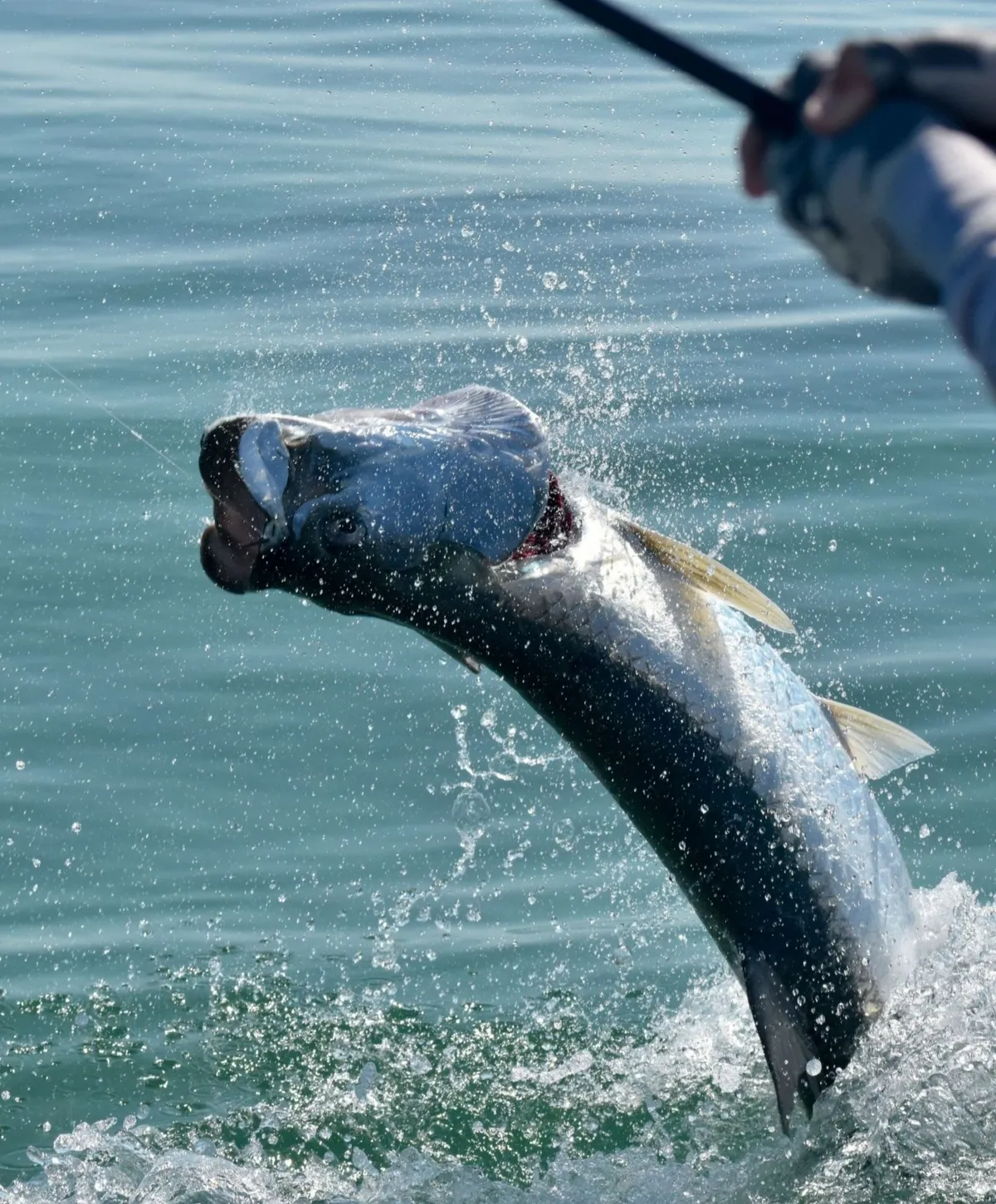
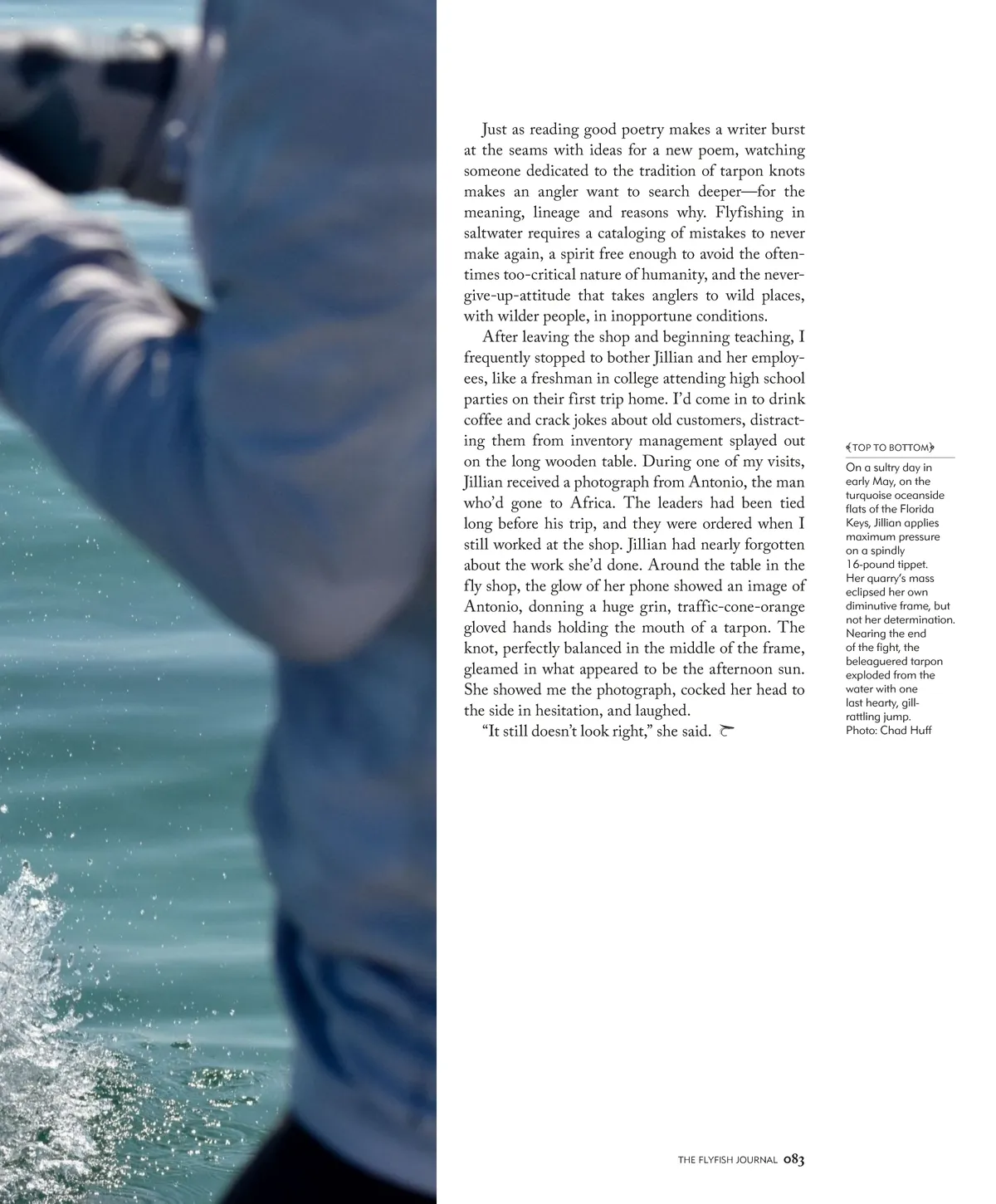
Just as reading good poetry makes a writer burst at the seams with ideas for a new poem, watching someone dedicated to the tradition of tarpon knots makes an angler want to search deeper—for the meaning, lineage and reasons why. Flyfishing in saltwater requires a cataloging of mistakes to never make again, a spirit free enough to avoid the often-times too-critical nature of humanity, and the never-give-up-attitude that takes anglers to wild places, with wilder people, in inopportune conditions. After leaving the shop and beginning teaching, I frequently stopped to bother Jillian and her employ-ees, like a freshman in college attending high school parties on their first trip home. I’d come in to drink coffee and crack jokes about old customers, distract-ing them from inventory management splayed out on the long wooden table. During one of my visits, Jillian received a photograph from Antonio, the man who’d gone to Africa. The leaders had been tied long before his trip, and they were ordered when I still worked at the shop. Jillian had nearly forgotten about the work she’d done. Around the table in the fly shop, the glow of her phone showed an image of Antonio, donning a huge grin, traffic-cone-orange gloved hands holding the mouth of a tarpon. The knot, perfectly balanced in the middle of the frame, gleamed in what appeared to be the afternoon sun. She showed me the photograph, cocked her head to the side in hesitation, and laughed. “It still doesn’t look right,” she said. • TOP TO BOTTOM • On a sultry day in early May, on the turquoise oceanside flats of the Florida Keys, Jillian applies maximum pressure on a spindly 16-pound tippet. Her quarry’s mass eclipsed her own diminutive frame, but not her determination. Nearing the end of the fight, the beleaguered tarpon exploded from the water with one last hearty, gill-rattling jump. Photo: Chad Huff THE FLYFISH JOURNAL 083
The Flyfish Journal The Flyfish Journal 15.3: Page 83