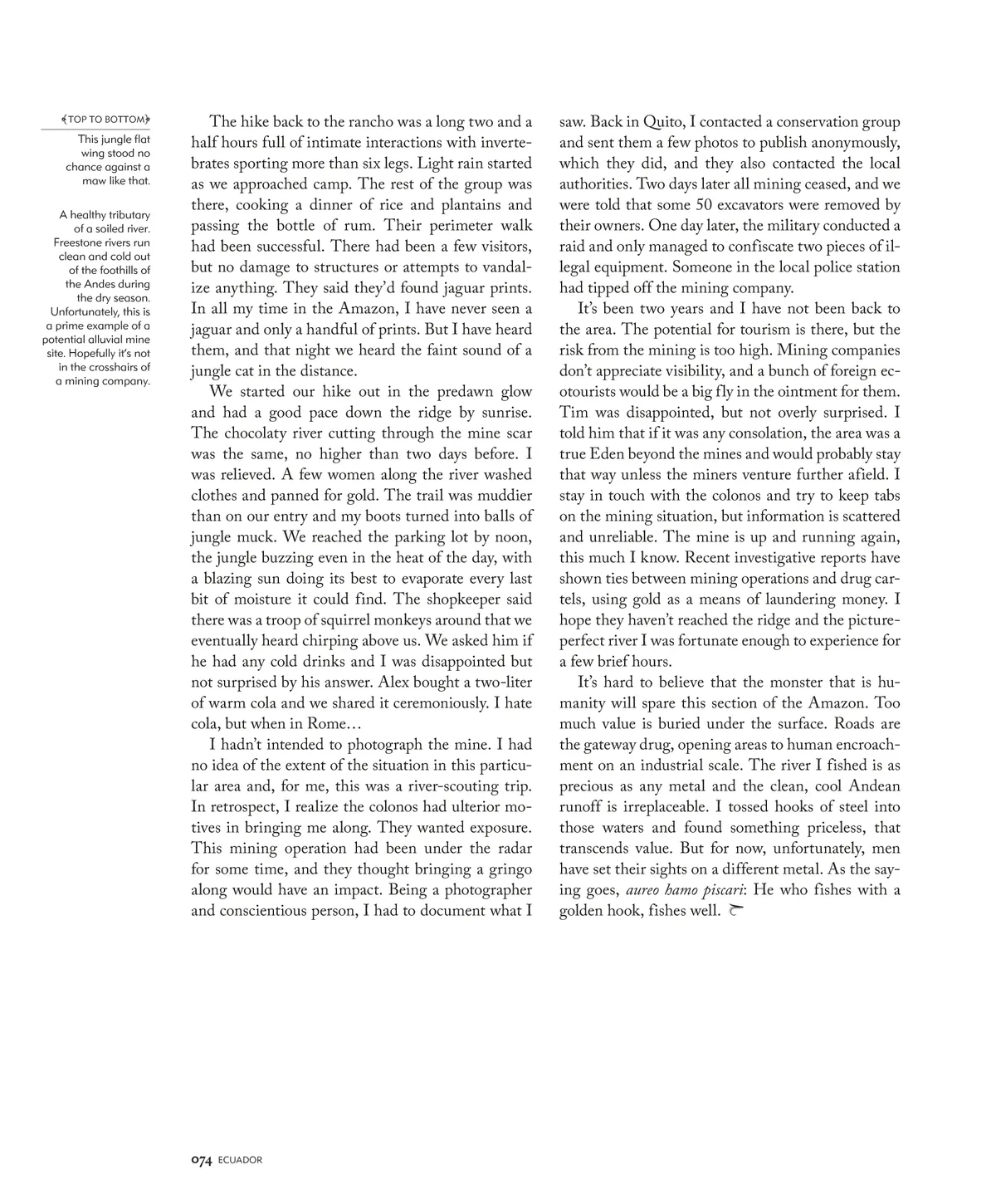
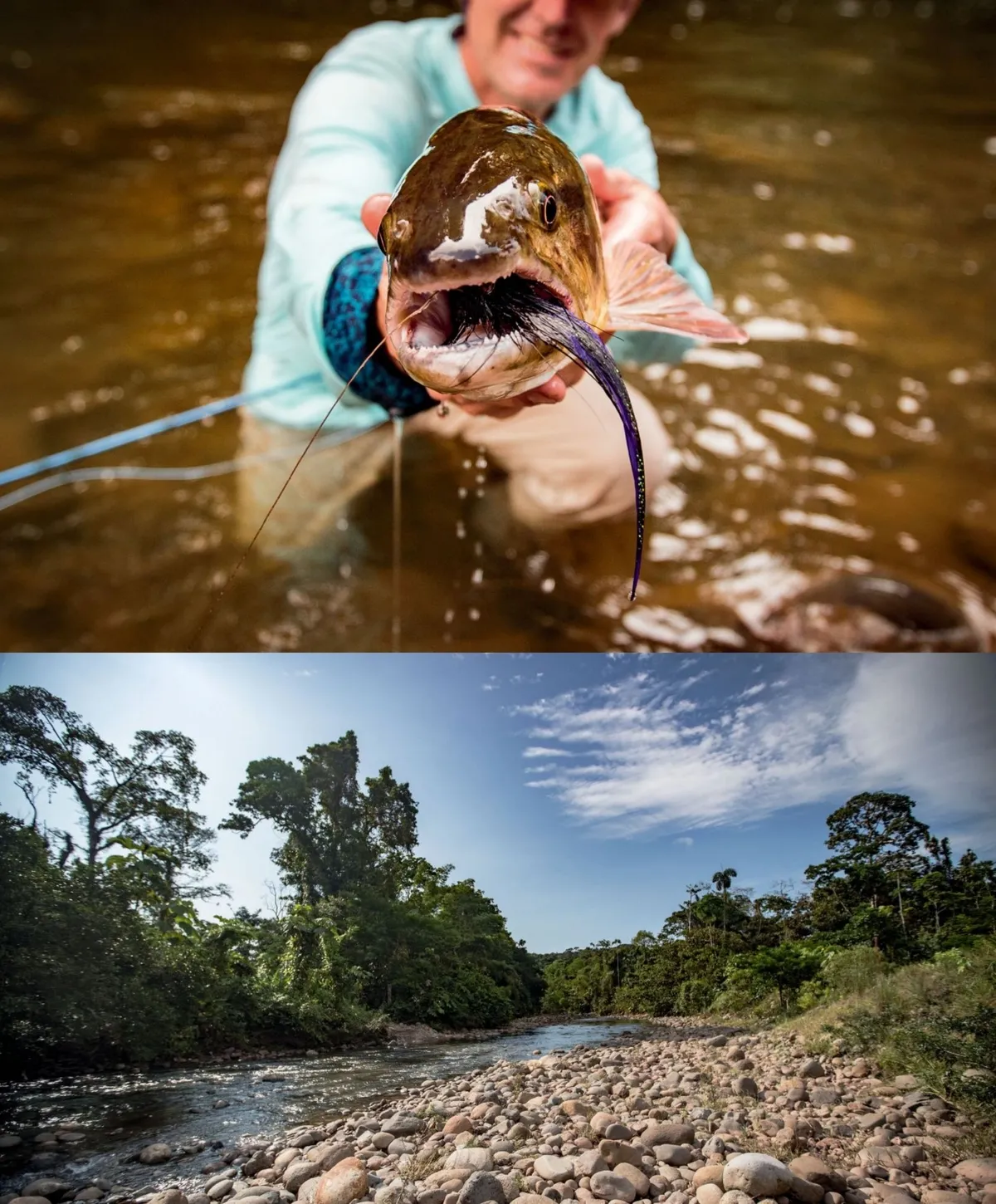
• TOP TO BOTTOM • This jungle flat wing stood no chance against a maw like that. A healthy tributary of a soiled river. Freestone rivers run clean and cold out of the foothills of the Andes during the dry season. Unfortunately, this is a prime example of a potential alluvial mine site. Hopefully it’s not in the crosshairs of a mining company. The hike back to the rancho was a long two and a half hours full of intimate interactions with inverte-brates sporting more than six legs. Light rain started as we approached camp. The rest of the group was there, cooking a dinner of rice and plantains and passing the bottle of rum. Their perimeter walk had been successful. There had been a few visitors, but no damage to structures or attempts to vandal-ize anything. They said they’d found jaguar prints. In all my time in the Amazon, I have never seen a jaguar and only a handful of prints. But I have heard them, and that night we heard the faint sound of a jungle cat in the distance. We started our hike out in the predawn glow and had a good pace down the ridge by sunrise. The chocolaty river cutting through the mine scar was the same, no higher than two days before. I was relieved. A few women along the river washed clothes and panned for gold. The trail was muddier than on our entry and my boots turned into balls of jungle muck. We reached the parking lot by noon, the jungle buzzing even in the heat of the day, with a blazing sun doing its best to evaporate every last bit of moisture it could find. The shopkeeper said there was a troop of squirrel monkeys around that we eventually heard chirping above us. We asked him if he had any cold drinks and I was disappointed but not surprised by his answer. Alex bought a two-liter of warm cola and we shared it ceremoniously. I hate cola, but when in Rome… I hadn’t intended to photograph the mine. I had no idea of the extent of the situation in this particu-lar area and, for me, this was a river-scouting trip. In retrospect, I realize the colonos had ulterior mo-tives in bringing me along. They wanted exposure. This mining operation had been under the radar for some time, and they thought bringing a gringo along would have an impact. Being a photographer and conscientious person, I had to document what I saw. Back in Quito, I contacted a conservation group and sent them a few photos to publish anonymously, which they did, and they also contacted the local authorities. Two days later all mining ceased, and we were told that some 50 excavators were removed by their owners. One day later, the military conducted a raid and only managed to confiscate two pieces of il-legal equipment. Someone in the local police station had tipped off the mining company. It’s been two years and I have not been back to the area. The potential for tourism is there, but the risk from the mining is too high. Mining companies don’t appreciate visibility, and a bunch of foreign ec-otourists would be a big fly in the ointment for them. Tim was disappointed, but not overly surprised. I told him that if it was any consolation, the area was a true Eden beyond the mines and would probably stay that way unless the miners venture further afield. I stay in touch with the colonos and try to keep tabs on the mining situation, but information is scattered and unreliable. The mine is up and running again, this much I know. Recent investigative reports have shown ties between mining operations and drug car-tels, using gold as a means of laundering money. I hope they haven’t reached the ridge and the picture-perfect river I was fortunate enough to experience for a few brief hours. It’s hard to believe that the monster that is hu-manity will spare this section of the Amazon. Too much value is buried under the surface. Roads are the gateway drug, opening areas to human encroach-ment on an industrial scale. The river I fished is as precious as any metal and the clean, cool Andean runoff is irreplaceable. I tossed hooks of steel into those waters and found something priceless, that transcends value. But for now, unfortunately, men have set their sights on a different metal. As the say-ing goes, aureo hamo piscari : He who fishes with a golden hook, fishes well. 074 ECUADOR
The Flyfish Journal The Flyfish Journal 15.3: Page 74