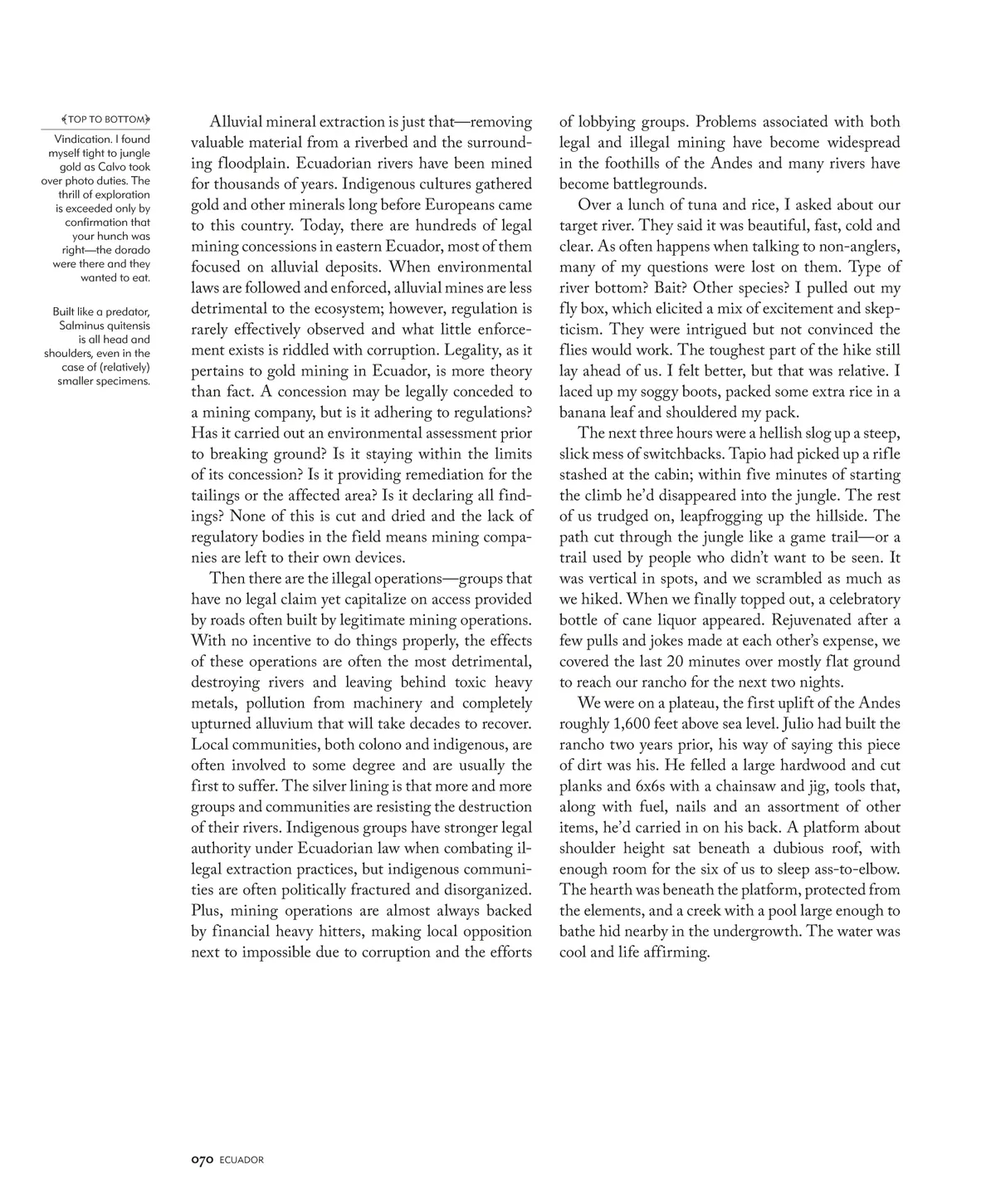
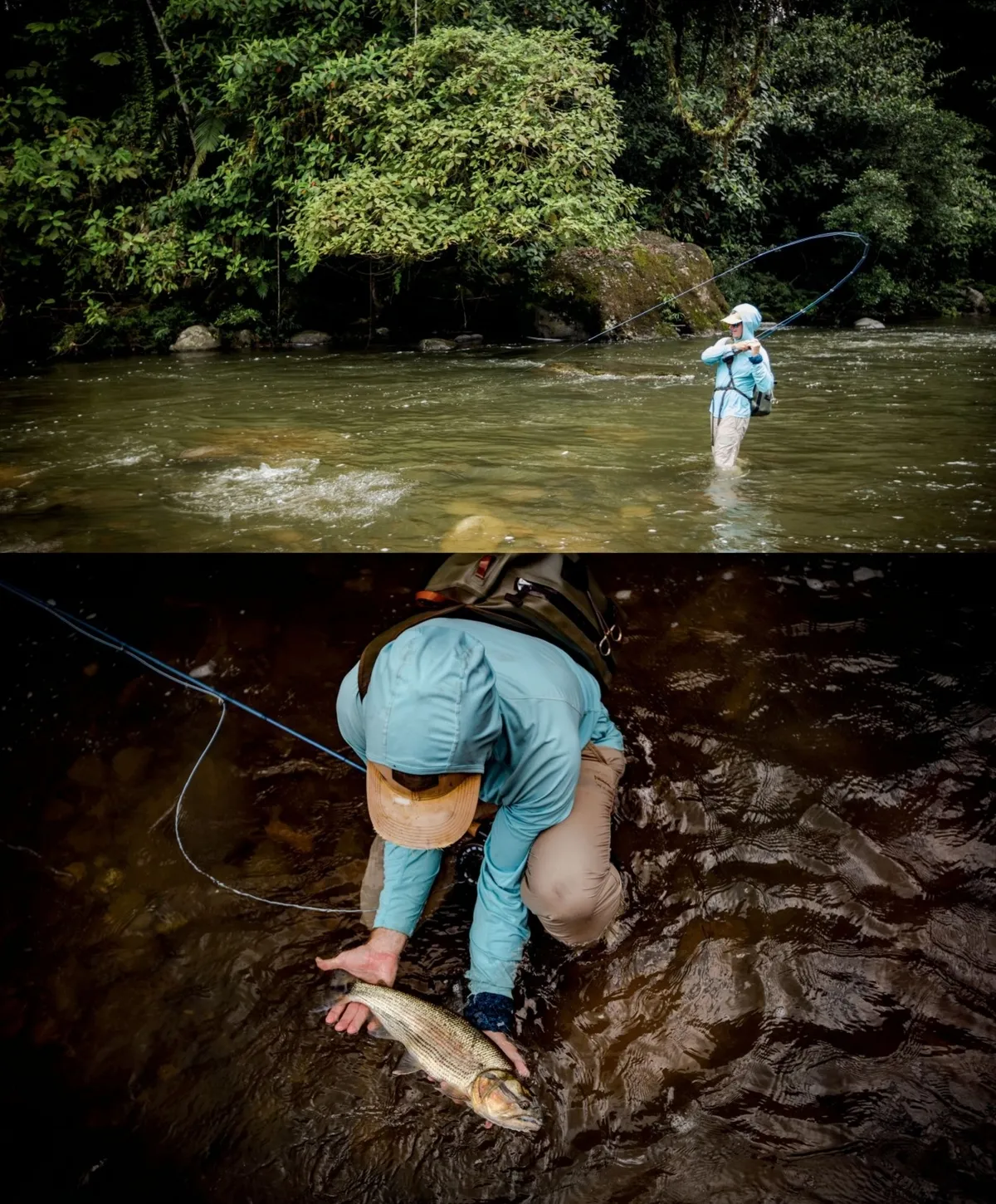
• TOP TO BOTTOM • Vindication. I found myself tight to jungle gold as Calvo took over photo duties. The thrill of exploration is exceeded only by confirmation that your hunch was right—the dorado were there and they wanted to eat. Built like a predator, Salminus quitensis is all head and shoulders, even in the case of (relatively) smaller specimens. Alluvial mineral extraction is just that—removing valuable material from a riverbed and the surround-ing floodplain. Ecuadorian rivers have been mined for thousands of years. Indigenous cultures gathered gold and other minerals long before Europeans came to this country. Today, there are hundreds of legal mining concessions in eastern Ecuador, most of them focused on alluvial deposits. When environmental laws are followed and enforced, alluvial mines are less detrimental to the ecosystem; however, regulation is rarely effectively observed and what little enforce-ment exists is riddled with corruption. Legality, as it pertains to gold mining in Ecuador, is more theory than fact. A concession may be legally conceded to a mining company, but is it adhering to regulations? Has it carried out an environmental assessment prior to breaking ground? Is it staying within the limits of its concession? Is it providing remediation for the tailings or the affected area? Is it declaring all find-ings? None of this is cut and dried and the lack of regulatory bodies in the field means mining compa-nies are left to their own devices. Then there are the illegal operations—groups that have no legal claim yet capitalize on access provided by roads often built by legitimate mining operations. With no incentive to do things properly, the effects of these operations are often the most detrimental, destroying rivers and leaving behind toxic heavy metals, pollution from machinery and completely upturned alluvium that will take decades to recover. Local communities, both colono and indigenous, are often involved to some degree and are usually the first to suffer. The silver lining is that more and more groups and communities are resisting the destruction of their rivers. Indigenous groups have stronger legal authority under Ecuadorian law when combating il-legal extraction practices, but indigenous communi-ties are often politically fractured and disorganized. Plus, mining operations are almost always backed by financial heavy hitters, making local opposition next to impossible due to corruption and the efforts of lobbying groups. Problems associated with both legal and illegal mining have become widespread in the foothills of the Andes and many rivers have become battlegrounds. Over a lunch of tuna and rice, I asked about our target river. They said it was beautiful, fast, cold and clear. As often happens when talking to non-anglers, many of my questions were lost on them. Type of river bottom? Bait? Other species? I pulled out my fly box, which elicited a mix of excitement and skep-ticism. They were intrigued but not convinced the flies would work. The toughest part of the hike still lay ahead of us. I felt better, but that was relative. I laced up my soggy boots, packed some extra rice in a banana leaf and shouldered my pack. The next three hours were a hellish slog up a steep, slick mess of switchbacks. Tapio had picked up a rifle stashed at the cabin; within five minutes of starting the climb he’d disappeared into the jungle. The rest of us trudged on, leapfrogging up the hillside. The path cut through the jungle like a game trail—or a trail used by people who didn’t want to be seen. It was vertical in spots, and we scrambled as much as we hiked. When we finally topped out, a celebratory bottle of cane liquor appeared. Rejuvenated after a few pulls and jokes made at each other’s expense, we covered the last 20 minutes over mostly flat ground to reach our rancho for the next two nights. We were on a plateau, the first uplift of the Andes roughly 1,600 feet above sea level. Julio had built the rancho two years prior, his way of saying this piece of dirt was his. He felled a large hardwood and cut planks and 6x6s with a chainsaw and jig, tools that, along with fuel, nails and an assortment of other items, he’d carried in on his back. A platform about shoulder height sat beneath a dubious roof, with enough room for the six of us to sleep ass-to-elbow. The hearth was beneath the platform, protected from the elements, and a creek with a pool large enough to bathe hid nearby in the undergrowth. The water was cool and life affirming. 070 ECUADOR
The Flyfish Journal The Flyfish Journal 15.3: Page 70