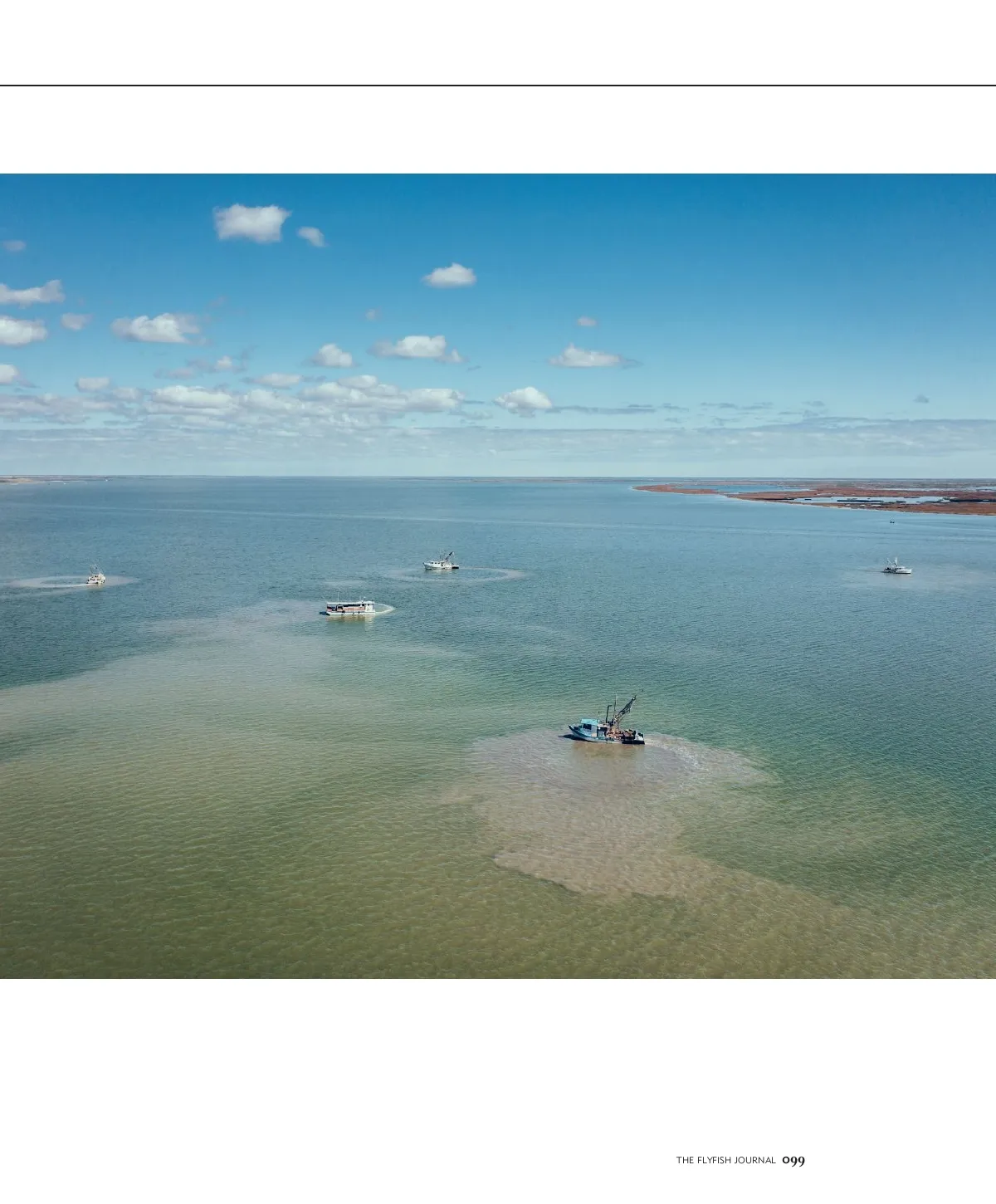
CONSERVATION SHELLED & SHUCKED TEXAS’ DISAPPEARING OYSTER REEFS Words: Nathaniel Riverhorse Nakadate RIGHT A birdseye view of a fleet of oyster-dredging boats near Rockport, TX, reveals the extent of the damage that can be done to the area’s fragile reef systems. Photo: Knox Kronenberg Oysters are radical , and fishing the Texas coast wouldn’t be what it is without them. They provide criti-cal habitats for a multitude of marine species and are in-tegral as filters to cycle nutrients and keep coastal waters clean, healthy and clear. They serve as the “kidneys” of the sea, filtering out organic and inorganic pollutants like carbon, nitrogen and phosphorus. A single oyster can filter as much as 30 to 50 gallons of water per day through its gills. So for those of us who fish, they are invaluable. Disappointingly, humans have a history of taking more than what nature can handle, and the chal-lenges currently facing the Texas coast are no different. Commercial harvest of oysters (primarily the east-ern oyster), compounded by the effects of hurricanes, drought and flooding, has been wreaking havoc on the bays here. With more depletion than the reefs can han-dle, things are quickly going south. Some of the opera-tors are coming from other states such as Mississippi, Alabama and Louisiana. According to a report from the Nature Conservancy, oyster habitat throughout the Gulf of Mexico has been reduced by more than 85 percent. This past spring, the Texas Parks and Wildlife Department held a series of public comment hearings that, along with the gathering of scientific data, were intended to help determine whether more permanent closures of oystern habitat should be implemented. A primary concern among conservation groups is the fact that the harvesting methods some companies utilize are nightmarish. Oyster boats drag steel cages over reefs and seafloors, pillaging most everything in their wake, destroying critical habitats and causing bycatch death to species like flounder, which are already facing their own challenges. Additionally, this dredging adds silt to the water column. Retired director of law enforcement for the Texas Game Wardens, Colonel Grahame Jones, believes oysters here could be diminished to the point of possible extinction in some areas, and that would be a disaster for the entire marine ecosystem. Though oysters can reproduce once they are 6 months old, the ideal breeding years are between 2 and 10. The larvae are so small they can only be seen under a microscope. From the time they hatch they already have a shell and can swim. At about two weeks they are just 1/64 th of an inch, and it takes two to three years for an oyster to grow to harvest size. For them to be able to continue growing they attach themselves to a firm substrate—the reefs that make that area so vital to Texas’ coast ecosystem. Despite this complicated life history, according to game wardens many companies ignore size regula-tions and opt to pay the fines if they get caught har-vesting undersized oysters. Jones says, “I believe that many businesses see the fines simply as a normal cost of business. I have seen multiple offenses by the same ships, repeatedly.” As such, wardens are considering legislation that would make the penalty a felony instead of what some feel is a slap on the wrist. “The resource is over-whelmed,” Jones says, “and it can be ruined for all.” The Texas Parks and Wildlife Department was forced to institute early closures on a number of im-portant oyster harvesting areas in winter 2021/22, with numerous sections of Galveston, Matagorda, Aransas and San Antonio bays shut down to fishing. In some cases, these closures—based on in-season sampling to determine the abundance of harvest-size oysters and the percentage of smaller ones—occurred less than halfway through the November to April season. While this has a detrimental impact on the livelihoods of commercial harvesters, the fact is that dredging these depleted reefs is unsustainable. In major cities like Houston, Dallas, Austin and San Antonio, the demand for oysters is strong as can be, as it is across the country and around the world. The nutri-tion oysters offer is remarkable. They are a rich source of vitamin D, copper, zinc and manganese, and as dietary sources are thought to be naturally more effective than various supplements. When we as consumers know where our food comes from and how it is faring, sustainably or not, we can at least proceed with more wisdom about what we choose to consume from the oceans or land. JT Van Zandt, a flyfishing guide from the Rockport, TX, area, has worked tirelessly to get the message out about the current situation and is rallying anglers to cir-cle the wagons and be stewards of the waters they care about, as well as let the state and other powers that be know what matters to them. He feels this should have been managed far more astutely and comprehensively. 098 THE FLYFISH JOURNAL
The Flyfish Journal The Flyfish Journal 13.4: Page 98