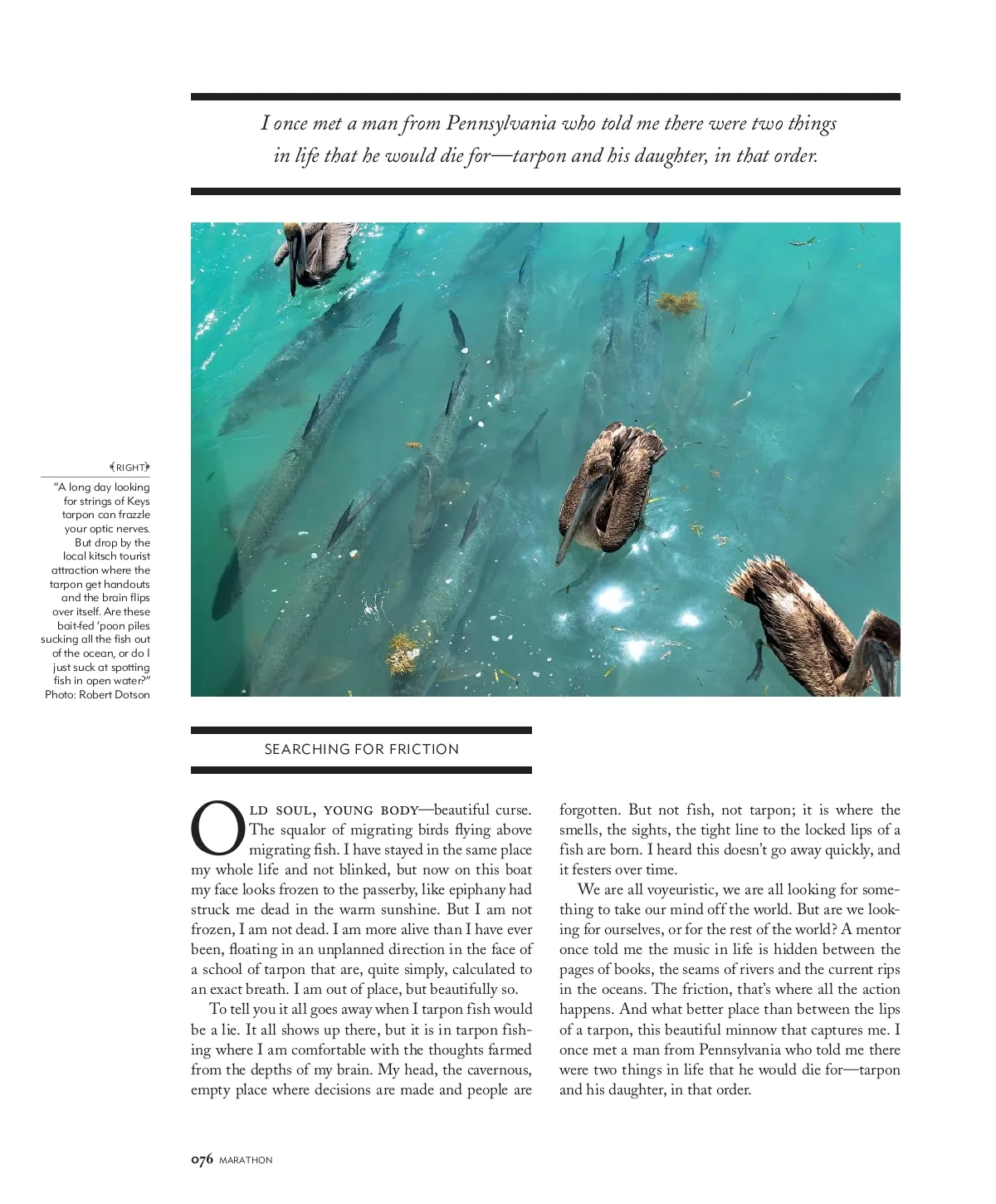
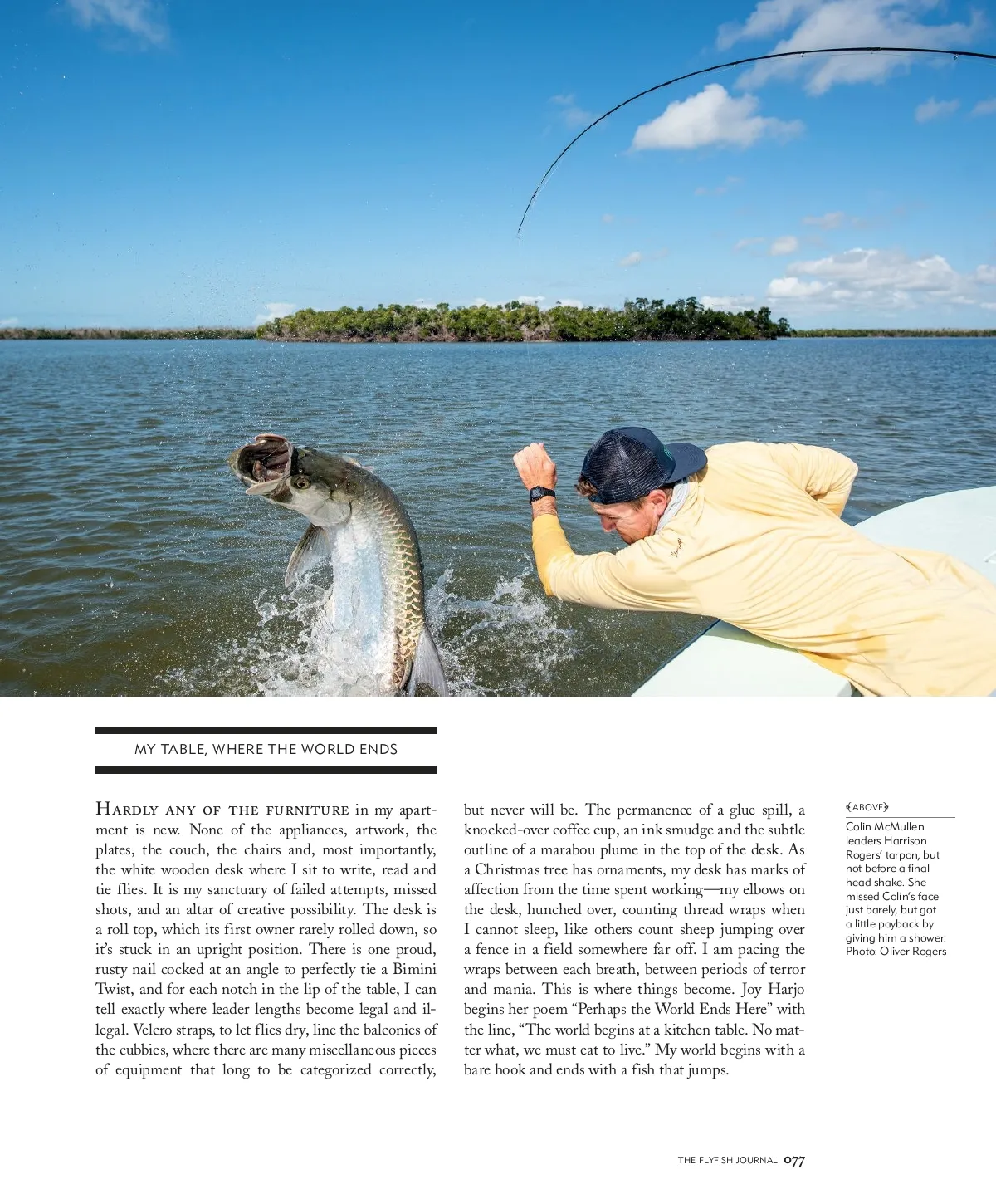
MY TABLE, WHERE THE WORLD ENDS Hardly any of the furniture in my apart-ment is new. None of the appliances, artwork, the plates, the couch, the chairs and, most importantly, the white wooden desk where I sit to write, read and tie flies. It is my sanctuary of failed attempts, missed shots, and an altar of creative possibility. The desk is a roll top, which its first owner rarely rolled down, so it’s stuck in an upright position. There is one proud, rusty nail cocked at an angle to perfectly tie a Bimini Twist, and for each notch in the lip of the table, I can tell exactly where leader lengths become legal and il-legal. Velcro straps, to let flies dry, line the balconies of the cubbies, where there are many miscellaneous pieces of equipment that long to be categorized correctly, but never will be. The permanence of a glue spill, a knocked-over coffee cup, an ink smudge and the subtle outline of a marabou plume in the top of the desk. As a Christmas tree has ornaments, my desk has marks of affection from the time spent working—my elbows on the desk, hunched over, counting thread wraps when I cannot sleep, like others count sheep jumping over a fence in a field somewhere far off. I am pacing the wraps between each breath, between periods of terror and mania. This is where things become. Joy Harjo begins her poem “Perhaps the World Ends Here” with the line, “The world begins at a kitchen table. No mat-ter what, we must eat to live.” My world begins with a bare hook and ends with a fish that jumps. ABOVE Colin McMullen leaders Harrison Rogers’ tarpon, but not before a final head shake. She missed Colin’s face just barely, but got a little payback by giving him a shower. Photo: Oliver Rogers THE FLYFISH JOURNAL 077
The Flyfish Journal The Flyfish Journal 13.4: Page 77